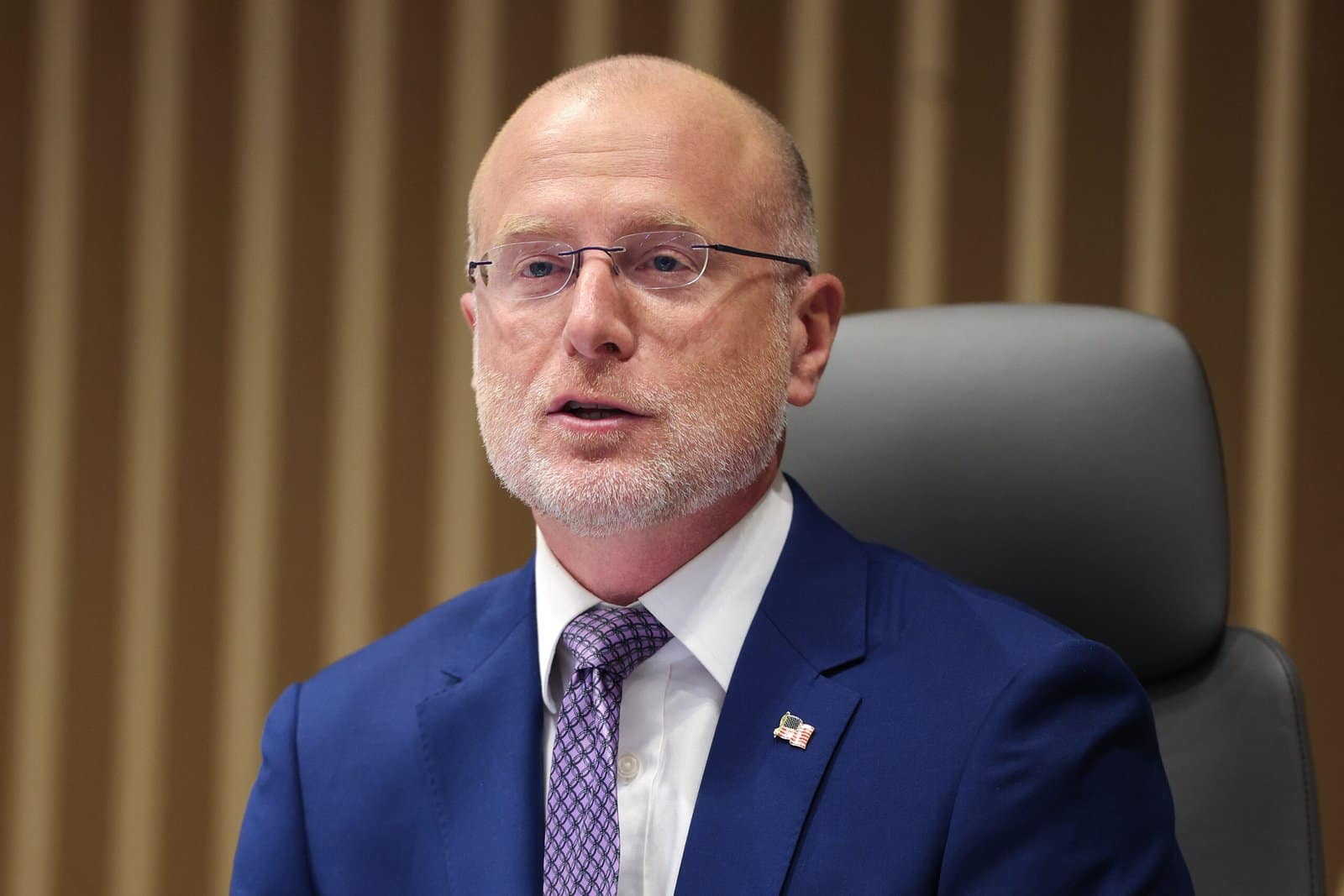
As Jimmy Kimmel‘s interview with James Talarico nears 7 million views on YouTube, FCC chairman Brendan Carr weighed in on Saturday evening, accusing the Texas U.S. Senate candidate of orchestrating a “hoax” to drive up “clicks and donations.”
Earlier this week, Kimmel told viewers that he would be sitting down with an interview with Talarico for his ABC late-night show, but that it would be posted to YouTube and not broadcast because of the FCC’s crackdown on its .
In a post on X, Carr accused Talarico of “just running the same hoax he did a few months ago on Colbert for the purpose of getting clicks and donations — he’s banking on people not understanding the statute or operating as partisan lemmings.”
Watch on Deadline
He also posted a meme of Talarico riding on a bicycle on Kimmel’s back before Kimmel puts a stick in the spokes and it crashes to the ground.
A Talarico campaign spokesperson did not immediately respond to a request for comment. The Kimmel interview had drawn 6.8 million views as of Saturday evening.
In February, Stephen Colbert posted an interview with Talarico to YouTube, telling viewers that he was warned by network executives about featuring the candidate on the broadcast. That interview generated 9.6 million views on YouTube. Like the Kimmel interview, the YouTube views were well over the average audience for the actual late-night broadcast.
In an interview this week, Talarico characterized the Kimmel incident as government censorship and a form of “cancel culture.” He also posted the interview to X, calling it “the interview Trump’s FCC doesn’t want you to see.”
For decades, daytime and late-night TV talk shows have operated on the assumption that they were exempt from the FCC’s equal time rule, which requires broadcasters who feature candidates to provide comparable time to their rivals, if it is requested. News coverage and news interviews have been exempt from the requirements, and the rule also does not apply cable or streaming, where the FCC’s authority is limited.
But in January, the FCC under Carr, appointed by Donald Trump, issued guidance to broadcasters that TV talk shows actually may not be exempt, a move that critics saw as a regulatory effort to crack down on daytime and late-night hosts the president does not like. Within weeks, the agency launched an investigation of ABC’s The View after it featured Talarico as a guest.
Until now, Carr had yet to weigh in on Kimmel’s latest criticisms and the decision to move the interview to YouTube. The late night host called the FCC’s equal time enforcement threats an effort to “make our editorial decisions for us, which of course we cannot accept.”
On Thursday, a White House spokesperson said that Kimmel was “play acting” to “create a false narrative,” and that Carr “has not threatened him regarding interviewing James Talarico, or any other candidate.”
Carr has denied that the FCC’s stricter enforcement of the equal time rule was an attempt to censor guests.
On X, Carr posted, “The Equal Time statute does not prohibit anyone from interviewing anyone on broadcast tv. It is about more speech, not less. Congress wanted to ensure that voters would decide elections, not media gatekeepers picking winners and losers by providing preferential airtime to some candidates and not others. Indeed, when the statute applies, it simply requires broadcast stations to offer comparable time and placement. And comparable does not necessarily mean an interview by the same person on the same program either.”
Carr’s comments were in response to a post from University of Texas Democrats, who noted the appearance of Sen. Ted Cruz (D-TX) on ESPN’s College GameDay on Saturday. The group posted on X, “So I can’t watch Talarico on Kimmel but I have to watch Ted Cruz on GameDay?”
The FCC chairman noted that the equal time rule would not apply to Cruz’s appearance because it was on a cable network and because the regulation covers only legal qualified candidates, or contenders who are in the midst of an election campaign. Cruz is not up for reelection this year; Talarico’s Republican rival is Ken Paxton.
ABC is challenging the FCC’s enforcement of the rule when it comes to The View, pointing out that the agency affirmed its exemption from the regulation in a 2002 letter.
The network also has sued the FCC on First Amendment grounds. It claims that the agency’s order that its eight owned stations submit to early license renewals is a form of regulatory retaliation, due to the Trump administration’s dislike of its news coverage and other content including The View and Kimmel.
In his post, Carr again defended the FCC’s regulatory efforts as within the bounds of the agency’s authority.
He wrote, “In exchange for that free and exclusive right to use spectrum, broadcasters made a deal with the American people. They agreed to operate, not in their own narrow interests, but in the public interest. There are various rules and policies that they must follow. This sets them apart from newspapers and cable shows and podcasts. But some broadcasters want to break their deal with the American people. They want to keep their free access to billions of dollars worth of spectrum, of course. They are less eager these days to abide by their public interest obligations.”
ABC’s legal team has argued that the FCC is engaging in selective enforcement, as its January guidance did not target conservative talk radio, and wrote that the equal time rule is unworkable for shows like The View as it puts network stations on the hook for time to potentially dozens of candidates on the ballot. Kimmel said this week that he would love to interview Paxton, but “our affiliates in Texas would have to give equal time to as many candidates as there are on the ballot. There’s about 10 candidates on the ballot.”
