
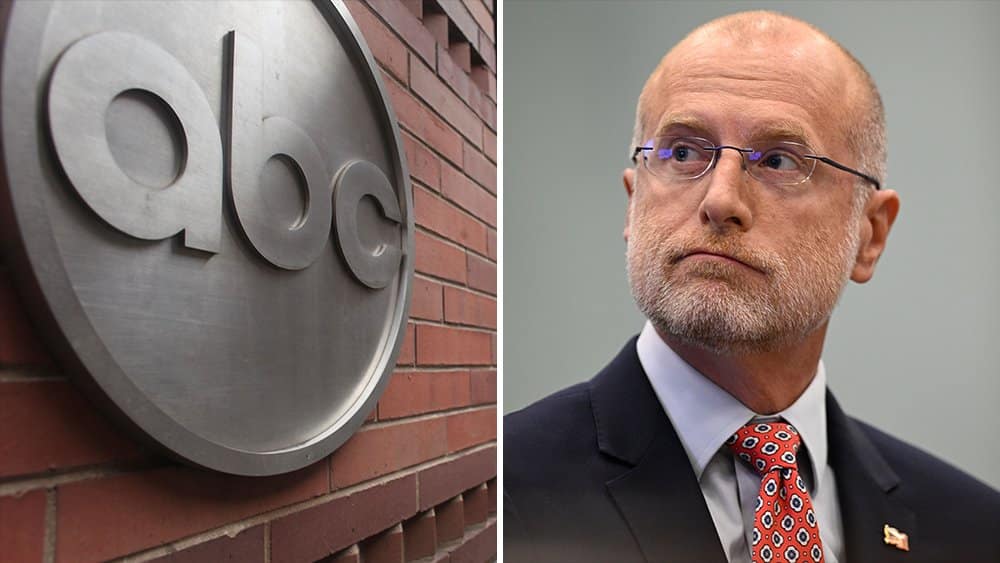
ABC responded to the FCC‘s justification for calling in its eight owned station licenses for early renewal, arguing in a new legal filing that the agency had failed to refute “substantial evidence” of a Trump administration “retaliatory motive.”
The network filed a First Amendment lawsuit against the FCC in August, claiming that its rare order that the stations’ licenses be reviewed early was part of an effort to chill its speech, citing statements made by President Donald Trump attacking its news coverage and late night host Jimmy Kimmel, and warnings from FCC Chairman Brendan Carr, who was appointed by the president.
The FCC is seeking to dismiss the lawsuit, arguing, among other things, that its early renewal order was tied to an investigation of Disney’s diversity, equity and inclusion practices. ABC is seeking an injunction to halt the early renewal proceeding.
Watch on Deadline
U.S. District Judge Loren L. AliKhanhas has set a hearing for Oct. 6.
In its filing, ABC’s legal team wrote that FCC officials “again improperly conflate the nature of Plaintiffs’ retaliation claims with the underlying substance of the early license renewal proceeding.”
ABC does “not ask this court to determine whether there was any violation of FCC rules. Instead, plaintiffs contend that the commission initiated the early renewal proceeding to retaliate against plaintiffs in violation of the First Amendment. And defendants have not legitimate expertise on that issue.”
The network’s legal team wrote, “The Commission ordered an unprecedented early license renewal proceeding to punish Plaintiffs for media coverage that the Administration dislikes. Defendants do not—and cannot—dispute that the First Amendment prohibits the government from exercising its regulatory powers to retaliate against a media organization for disfavored speech. And nothing in their brief refutes the substantial evidence of Defendants’ retaliatory motive.”
In complaining about network content, Trump has called for the revocation of ABC’s licenses and that of other broadcasters.
The network’s lawyers contend that the FCC offers “no response” to Carr’s own “statements indicating that he will use the early license renewal proceedings to review” ABC’s editorial decisions, including its decision not to broadcast Trump’s presidential address in July.
As for the DEI investigation, the network’s legal team argued that in response to a routine discovery dispute, the agency ordered the license review, an “unprecedented proceeding” that is the “broadcaster equivalent of the death penalty.” The first of the ABC licenses was not scheduled to come up for renewal until 2028.
More to come.
