
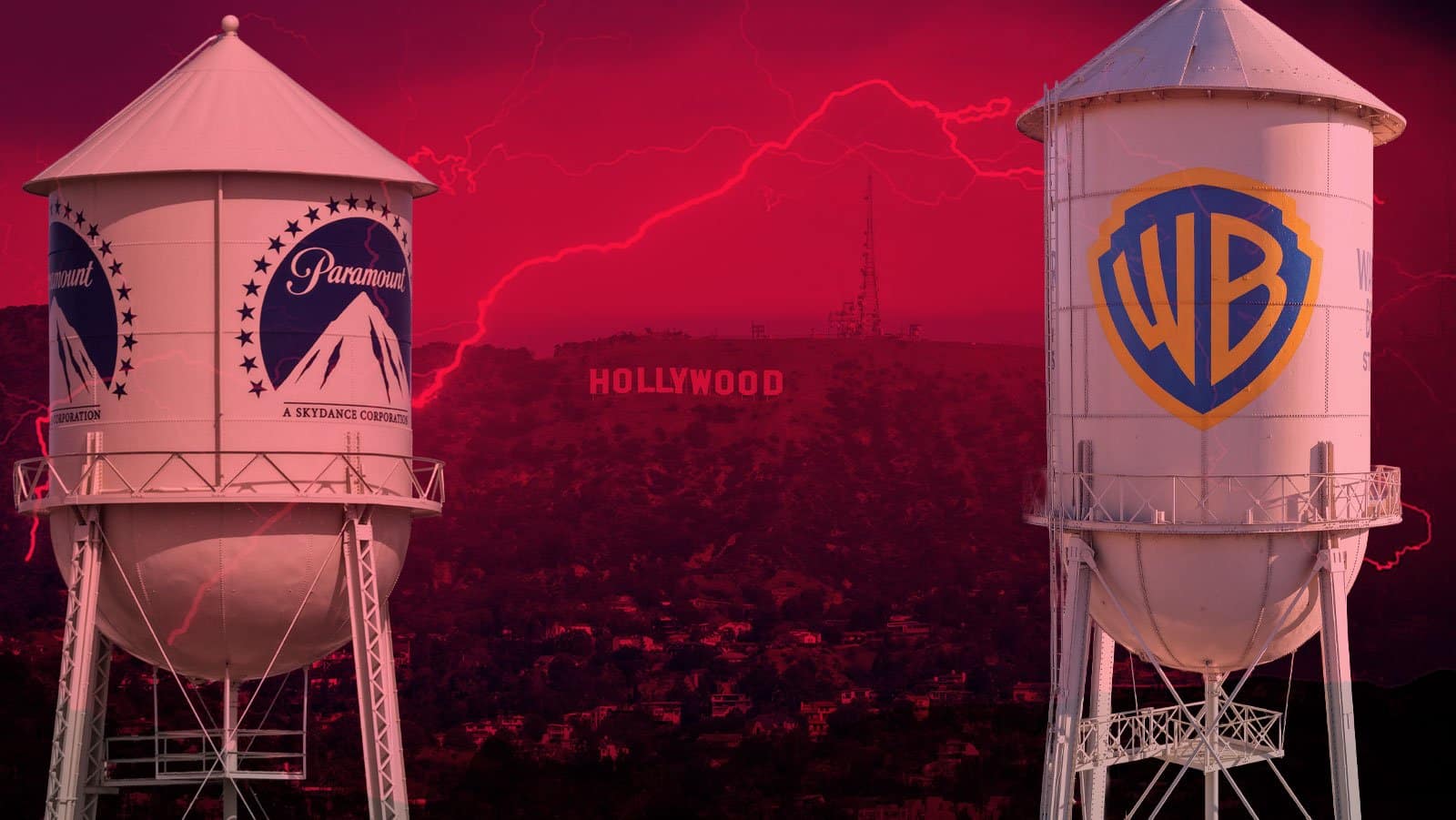
A Zoom call on Wednesday with 500 senior Warner Bros staffers to discuss Paramount‘s settlement of the antitrust lawsuit brought by state attorneys general related to its merger with WBD did little to dissipate the gloomy, Mordor-like clouds over the Burbank lot, to use a Lord of the Rings reference.
The video call, which has been routine since Paramount won the $110 billion bid for Warner Bros Discovery, was led by WBD Studios Chief Operating Officer Simon Robinson, who is running point on the merger integration; Chief Legal Officer Priya Aiyar; WBD Chief Comms Officer Robert Gibbs; and HR boss Amy Girdwood. According to sources, the four conceded they didn’t have much visibility into Paramount’s plans for a newly combined company, but indicated that the anticipation is for the deal to close in about 10 days, in line with Paramount CEO David Ellison‘s two-week timeframe he provided Monday.
The name and the leadership structure of the new company will likely be announced ahead of close, the executives reportedly said, though they weren’t clear as to when exactly that might be. We heard that Girdwood told leaders to take a moment to reflect on the great work accomplished during their tenures.
Watch on Deadline
“It feels like a scramble,” one source said.
To say staffers were surprised by the AG settlement Monday doesn’t really cover it.
“It was a big shock,” one person said. “If you were riding the roller coaster, you felt like things were not progressing.”
Still, even if the settlement and its timing came as a surprise, the ultimate result seemed inevitable as WBD CEO David Zaslav has been hellbent on selling the studio. Ellison’s takeover of the cinematic institution founded by Albert, Harry, Sam and Jack Warner “was always bound to happen,” one insider exclaimed.
Zaslav, who is likely to walk away with more than $600 million from the $110B merger, was not on today’s Zoom, we’re told.
The Ellison-run Paramount has said that the Warner Bros acquisition will yield $6B in synergy savings, which don’t necessarily translate into job cuts, but rather by reducing inefficiencies in other structural areas (i.e., real estate portfolios, data servers).
But Warner Bros staffers aren’t buying that.
“We’ve been here before. We know what it looks like,” said one insider about the changeover in ownership of Warner Bros over the past decade. It was only four years ago that AT&T dumped WarnerMedia into the hands of Discovery.
Myriad people inside Warner Bros are cynical about the capping of severances and the fact that only a few at the top are bound for a post-merger windfall. There’s also ire over the pausing of contract renewals due to the acquisition, as well as irritable infighting between departments about theatrical failures this year: No one WB title has cleared $100M at the domestic box office, with the highest-grossing movie stateside being Wuthering Heights at $84M. Home entertainment and data analytics divisions were none too happy about DC’s Supergirl tanking; with its $186M net production cost and a global box office gross of $126.3M, key staffers believe DC Studios chose the wrong comic book character to adapt.
On the immediate horizon as the Paramount-Warner Bros marriage comes together is Digger, the $125M political satire starring Tom Cruise, directed by Alejandro G. Iñárritu and produced by Legendary. It opens on October 2. While domestic debut prospects are at around $20M, Warners is hoping to get past any sour headlines about box office-to-cost ratios on the film, much like it did on One Battle After Another, as the four-time Oscar-winning filmmaker’s Doctor Strangelove-like epic is being primed as an awards-season contender. It is a chip Paramount really doesn’t have on its year-end schedule.
The new Paramount could also inherit another awards contender and its first billion-dollar-grossing title since Skydance took over the Melrose Ave lot with Legendary/Warner Bros’ Dune: Part Three. That opens on December 18.
At Paramount, the latter epic would fall into the arms of global marketing and distribution guru (and former WB senior ranking theatrical suit) Josh Goldstine, who led the Dune franchise across two movies to a $1.12B global gross and eight Oscars.
We’ve heard on the Paramount side that it’s still TBD in regards to how the merger will handle duplications in marketing and distribution.
“There could be more fear on the Paramount side,” says one source in the know when it comes to marketing. How’s that? Goldstine will be back together with the team he built at Warners, meaning Dana Nussbaum and Christian Davin in global marketing along with Creative Advertising EVP John Stanford.
There’s also a thick fog around those staffers who were bound to decamp from Warner Bros proper in the previously planned Gunnar Wiedenfels-led Global Networks spinoff.
Yes, Warner Bros staffers are already putting themselves out there for other jobs. Some of them have already found new gigs: Former EVP Comms Katie Martin Kelly, prized by Warner Bros Motion Picture group co-heads Mike De Luca and Pam Abdy, high-tailed it for Netflix as her contract ended, rather than wait for the Russian roulette the new conglomerate could bring. Former HBO Max EVP Originals Marketing Pia Barlow found a new job at Amazon MGM Studios as their Series Marketing VP, a gig that triggered WBD to sue for poaching.
The merger closing will likely trigger more voluntary departures as many WBD executives had been waiting to cash out stock options post-transaction, no longer bound by contracts that typically provide a way out in case of change of ownership.
“Since David Zaslav took control of Warner Bros, there’s just been thousands of jobs lost,” one former Turner publicist emphatically told us. “Those are jobs that the entertainment industry is never going to get back.”
And therein lies the ultimate piercing wound for any Warners or Paramount employee in the danger zone: The fact that there are not a lot of jobs out there is a big deal.
What’s more, adds a source, “People are very concerned about the survival of the Warner Bros brand.”
Counters a senior ranking insider at the conglomerate: “There’s a feeling of relief from senior executives to junior staff about the possibilities that the new company can bring. They were very excited by David Ellison’s note.”
For now, Paramount is inheriting at least 39 Warner Bros theatrical releases on the calendar dated between October 2 this year and the end of 2028. That output reps 56% of what will be a currently combined 70 features between the two studios. During the agita of Netflix and Paramount courting Warner Bros, the studio’s greenlighting of productions has been at a loud hum; assumptions were made by some that Warner Bros Motion Pictures would be in purgatory during merger talk time, and that filmmakers and reps would be wary of taking projects to them. That’s not really an option for content creators at a time when it’s a miracle for any major motion picture to get off the ground.
Something to look forward to: While a Barbie sequel hasn’t been greenlit due to ongoing talks with top-tier talent including director Greta Gerwig and stars Margot Robbie and Ryan Gosling, expect that to be one of the first orders of business for the new Ellison-owned Paramount-Warner Bros.
Beams one optimistic Warner exec, “The new merger gives us the all the financial resources to compete on a level with the big streamers.”
