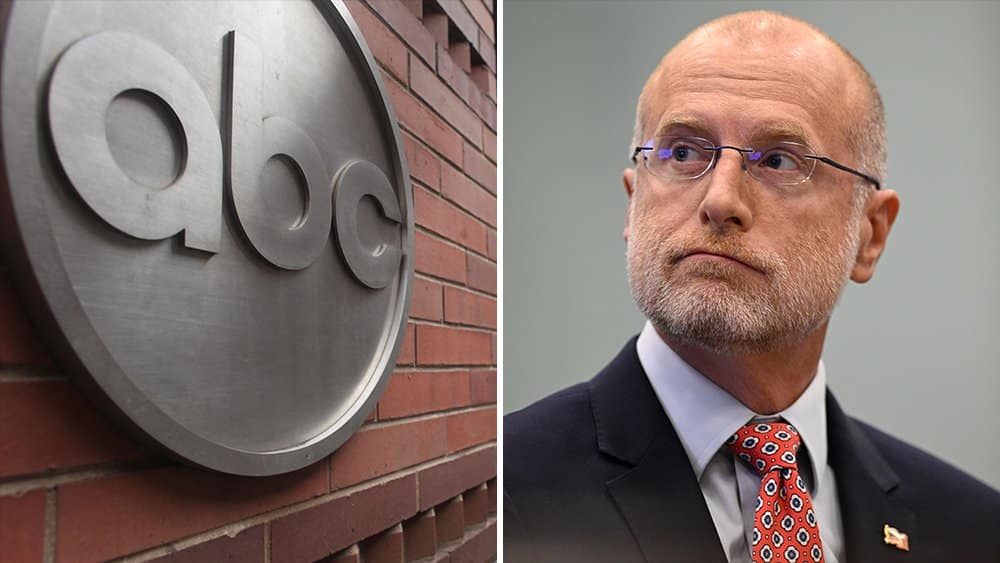
A federal judge heard arguments Tuesday in ABC‘s First Amendment lawsuit against the FCC, with the network’s attorney arguing that the Trump administration’s threats to its broadcast licenses have created an ongoing chilling effect.
The network sued the agency in August after the latter issued an order calling for ABC’s eight broadcast stations to submit to an early renewal proceeding. The highly unusual action that came after Donald Trump urged the FCC to revoke the network’s licenses, along with calls for Jimmy Kimmel to be fired and complaints about its news coverage, as well as warnings from the president’s FCC chairman Brendan Carr.
“We are watching everything we do,” ABC’s lead attorney, Beth Wilkinson, told U.S. District Judge Loren AliKahn during a two-hour hearing today in Washington, D.C.. She pointed to Trump’s call for the network to lose its broadcast licenses for not airing a speech in July, noting that it “brings out anger in the administration and retaliation from the agency.”
Watch on Deadline
At one point, Wilkinson compared ABC’s situation to the French Revolution, with people forced on a guillotine, wondering if anything will come down. The threat of losing broadcast licenses, she said, is one of a “death penalty” for stations.
AliKahn did not make a ruling, and asked the parties for additional submissions with deadlines through October 14.
Amid a flurry of FCC investigations of the networks under Carr, ABC’s lawsuit is the first major media challenge to those regulatory threats since Trump returned to office.
The FCC is seeking to dismiss the lawsuit, arguing, among other things, that its early renewal order was tied to an investigation of Disney’s diversity, equity and inclusion practices.
A large portion of Tuesday’s hearing was devoted to a critical jurisdictional question the network must overcome first. The agency’s lawyers contend that the network first had to exhaust administrative remedies before bringing the litigation, and that such a challenge has to be brought before the D.C. Circuit, not the district court.
Asst. U.S. Attorney Dimitar P. Georgiev, representing the FCC, told the judge, that ABC is “a regulated entity being subjected to regulatory inquiry by its regulatory.” He said that after the FCC’s media bureau issued its order for early licenses renewals, ABC could have appealed to the full commission.
Wilkinson argued that the commission could still turn down the appeal, allowing Carr to hold up the proceedings for years and even months of uncertainty.
Wilkinson said that the network already has changed its consideration of coverage and content amid the FCC threats. Among other things, she pointed to the decision by The View to forgo clips of political candidates on its “Hot Topics” segment this cycle, out of concern it will invoke FCC scrutiny because of the equal time rule. The agency launched an investigation in February after the show featured Texas U.S. Senate candidate James Talarico. The rule requires broadcasters to provide comparable time to rivals when they feature qualified candidates, but ABC has contended that The View has long fallen under an exemption for news programming.
The judge did not say which way she was leaning, but she asked the government’s lawyers for additional information on what other options the FCC had other than calling for early license renewals during its DEI investigation. Wilkinson said that the FCC was making a “pretextual” excuse in linking its early renewal order to the DEI investigation, as what was at issue was a discovery dispute over the production of documents. The order came right after Trump called for Kimmel to be fired, she noted.
AliKhan also pressed Georgiev on comments made by Carr after Trump’s July speech. The FCC chairman told reporters that month that ABC’s decision not to air the primetime address on its broadcast network was likely to come up in the early renewal proceeding. She asked whether that undermined the contention that the early renewal order was about DEI, not newsroom and content decisions.
“The statements are the statements,” Georgiev said, characterizing Carr’s comments as “awkward.” But he added that once an early renewal proceeding is launched, the FCC takes public comments that can be on a variety of issues for and against the licenses.
