
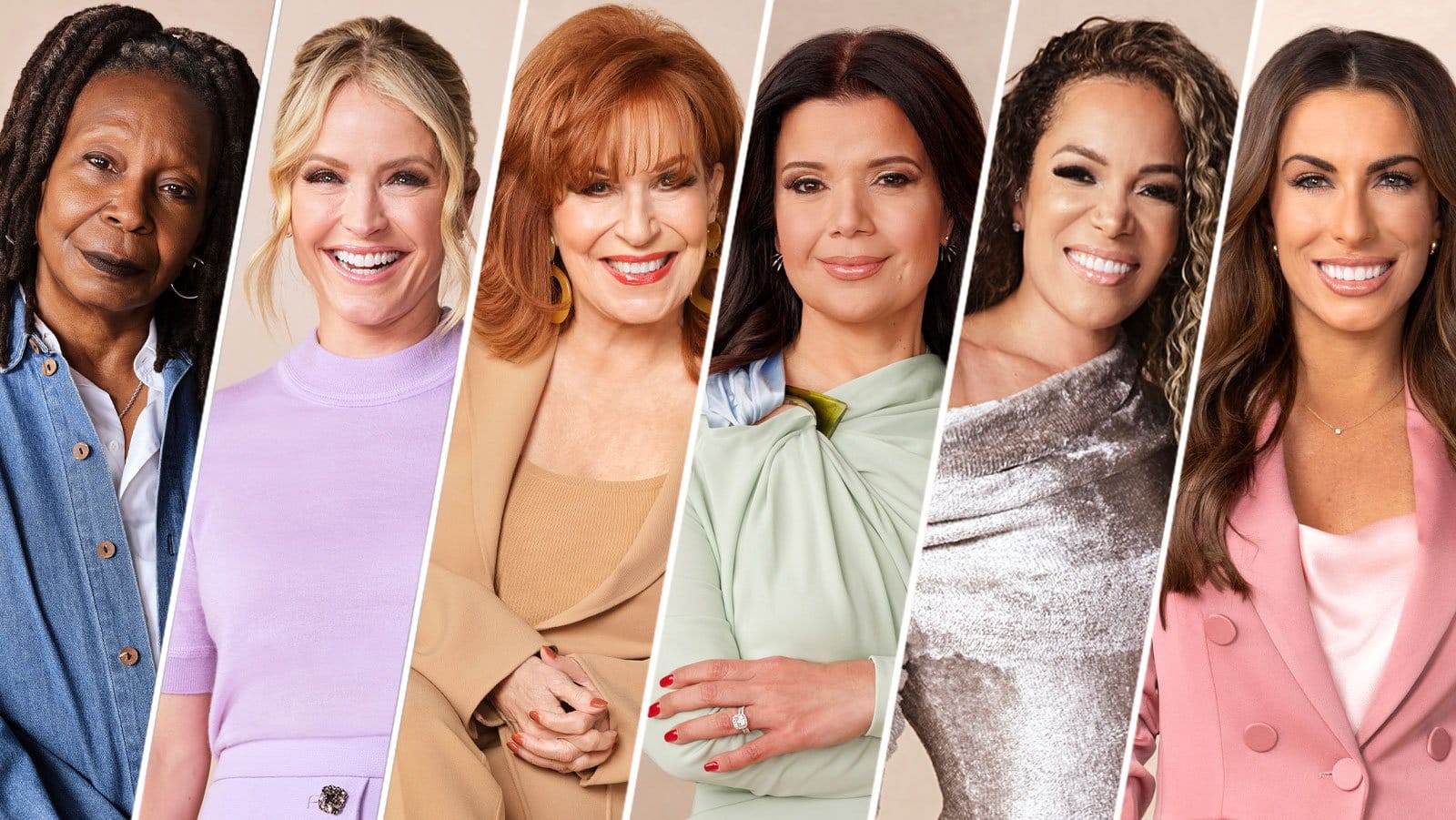
ABC contends that a “broad and cross-ideological consensus of commenters” backs the editorial independence of The View, amid an FCC investigation into the daytime talk show and whether it should face restrictions on featuring political candidates as guests.
In a response to an FCC public comment proceeding, ABC’s legal team again argued that the show was being singled out because it was disfavored by the Trump administration, warning that the agency’s efforts to crack down on the show would not survive First Amendment judicial scrutiny.
ABC’s legal team, led by Paul Clement, wrote in their filing, “The First Amendment does not permit the government to sit in an editor’s chair. Yet that is the seat the Commission now proposes to take— deciding which broadcast programs qualify as legitimate news and, for those it finds wanting, compelling them to surrender their airtime to guests they never chose to feature.”
FCC Chairman Brendan Carr launched an investigation into the show after it featured James Talarico, a Democratic candidate for U.S. Senate in Texas. The probe is of ABC’s owned station in Houston, which held that the show is exempt from equal time requirements because it is a “bona fide” news program. The equal time regulation requires broadcasters who feature political candidates to offer comparable time to rivals, if requested.
Watch on Deadline
ABC, however, said that the FCC’s action was “unprecedented,” diverging from years in which talk shows in general have been treated as “bona fide” news programs, and therefore not on the hook to provide equal time. The network pointed to a 2002 FCC ruling that confirmed that The View, produced under the network’s news division, was exempt.
As part of the investigation, Carr opened a proceeding in May to take public comments. More than 76,000 have been filed, with the network claiming that the “overwhelming majority” urged the FCC to “respect the broadcaster’s editorial independence.” The number of commenters rose dramatically after ABC launched an on-air ad campaign last month urging viewers to chime in with the agency. In the ad, a narrator says, “The View has welcomed your favorite guests and covered the issues you care about for nearly 30 years now. The FCC wants to control who is allowed to appear on the show. Viewers, use your voice.”
In response, the FCC and Carr have claimed that ABC is running “a campaign of misinformation” about the . The View can still feature political candidates, but the network’s stations may be on the hook to offer comparable time to rival candidates.
“The law simply requires the offering of comparable time and placement,” Carr told reporters last month. “It doesn’t dictate you have to be on any particular show, so to the extent that was a statement of law, that’s not consistent with what the law provides.”
The network, though, has argued that requiring the Equal Time rule for shows like The View “does not expand speech; rather, it makes coverage infeasible, which ultimately reduces it.” As an example, they pointed to California’s recent gubernatorial primary, which has 60 qualified candidates who each could demand time.
In its most recent filing, ABC’s legal team also defended its call for public comment, writing that “there is nothing ‘misleading’ about alerting the public that the proceeding could impinge on a broadcaster’s editorial discretion over who appears on its programming. That is simply an accurate description of the power the Commission proposes to claim for itself.”
The network again claimed that the show was being singled out by the administration, while other broadcasters, like talk radio programs, dominated by voices on the right, were not. In January, the FCC issued guidance warning that TV daytime and late night talk shows should not assume that they were exempt from the Equal Time rule; the guidance did not address radio.
ABC said in the filing, “The Commission has trained its attention on daytime and late-night television—programs perceived as unfriendly to the current administration—while leaving untouched the vast landscape of talk radio, where candidates routinely appear without their opponents. A rule pressed against one set of speakers and quietly suspended for another, along lines that track the administration’s political preferences, is not evenhanded regulation.”
Among the groups filing in support of ABC were the Foundation for Equal Rights and Expression, the ACLU, UltraViolet and TechFreedom. The network’s legal team also cited a quote from Sen. ted Cruz (R-TX), who has sharply criticized Carr’s attacks on ABC late-night host Jimmy Kimmel.
The Center for American Rights, which has urged the FCC to enforce the Equal Time rule, arguing in a filing that The View “is primarily an entertainment program. That is evident from three sets of facts: the cohosts, the behind-the-camera producer and director, and the guests.”
Among other things, the center said that in the first five months of 2026, the show featured 126 non-political guests and 12 political guests.
“Of the 12 political guests, nine were Democrats and three were Republicans (though one Republican, author Sarah Isgur, is associated with Never Trump),” the center stated in its filing.
The network’s legal team wrote that such factors are not part of the analysis of whether the show is bona fide news. “They instead urge the Commission to graft on factors it has never used—the opinions of a program’s hosts, the political balance of its guests, the ratio of news to entertainment, and whether an interviewer holds government-approved journalistic credentials,” ABC’s legal team wrote.
Instead, the network’s legal team stated, the FCC’s test has been whether the program is regulary scheduled, whether a broadcaster or independent producer controls the program and whether a producer’s decisions are based on newsworthiness and not to advance or harm and individual’s candidacy.
Like its earlier filing, ABC seemed to be keying up a lengthy legal battle, with its latest filing suggesting that the Equal Time rule itself is constitutionally problematic given the dramatic changes in the TV landscape.
Still, the network likely would be constrained from challenging an FCC decision in court until the agency actually acts. That is an open question, as Carr has not acted on an array of investigations and proceedings, including one launched early last year that focuses on how CBS’ 60 Minutes edited an interview with Kamala Harris.
The network’s legal team urged that the full commission act on the matter, rather than merely the agency’s media bureau, and that a decision should be made “expeditiously.”
The FCC’s actions “are already chilling speech ahead of the fast-approaching 2026 general election, and every day of uncertainty compounds that harm,” the network’s lega team wrote.
