
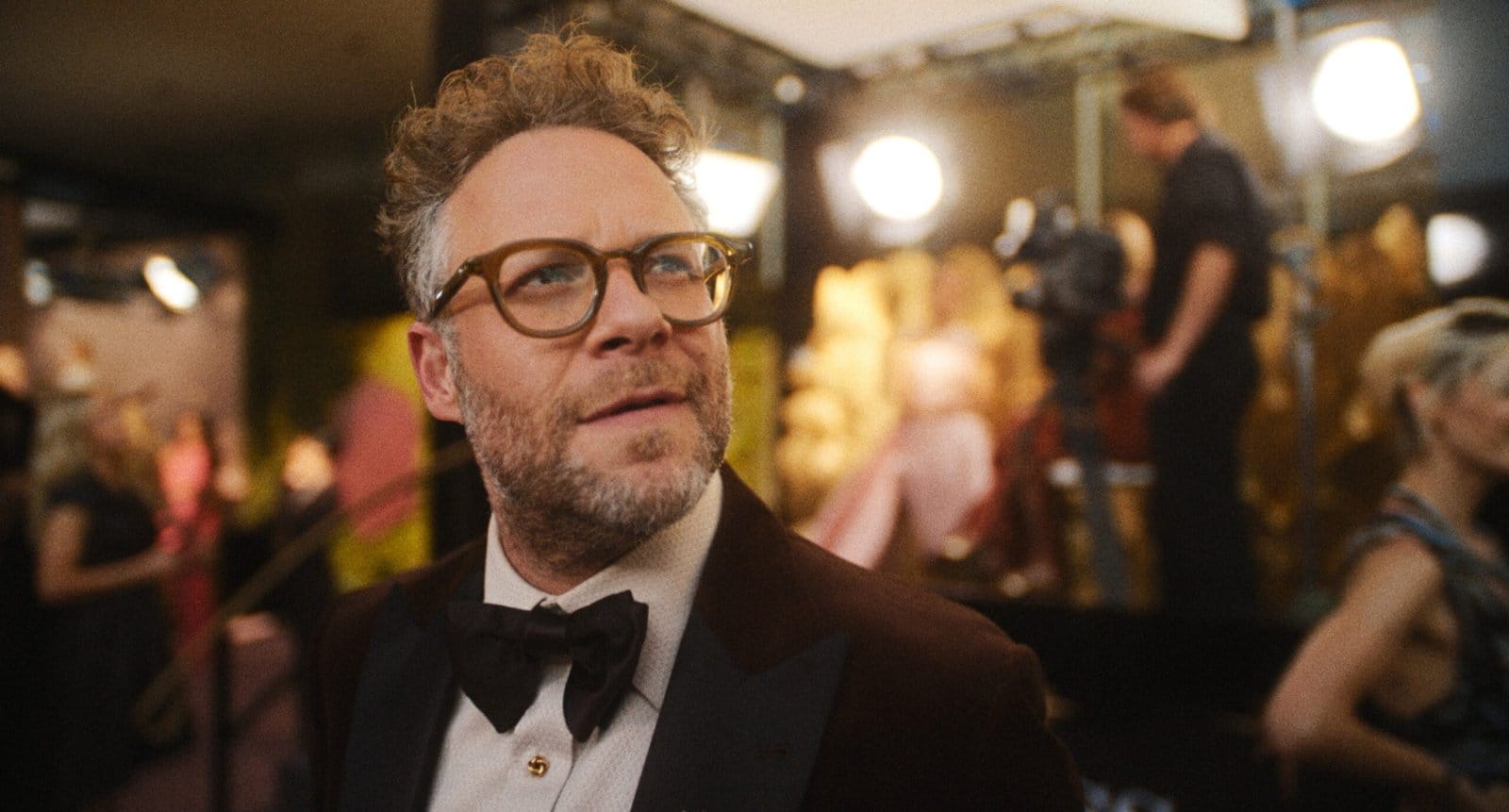

The dealmaking machinery seems stalled at some studios due to legalistic clashes over mergers, but at Continental Pictures, the green lights are flashing. Faux but green.
Seth Rogen, production chief of the fictional Continental, is closing fictional deals for hot new fictional projects as The Studio plunges into its Season 2 at Apple TV. The king of stoner comedy is again flying high, coveting 13 Emmys for co-creating last season’s streamer series while simultaneously earning strong reviews for co-starring in The Invite, a sophisticated indie comedy directed by Olivia Wilde.
“Sophisticated” is a welcome word for Rogen, one of whose clunky comedies once demolished the entire management of Sony Pictures. Jumping from Knocked Up and Superbad, Rogen and partner Evan Goldberg in 2014 shot The Interview, a supposed laugh riot about Kim Jong-un. Korea’s unfunny dictator responded by nuking the studio’s tech apparatus, thus disclosing its financial secrets.
Watch on Deadline
Having fostered some 40 projects over 20 years as actor, writer or producer, Rogen depicts himself in The Studio as a nimble but insecure boss; he frets about being disrespected by filmmakers like Martin Scorsese and pushed by his financial backers into committing to overbudgeted blockbusters – even one about the heroic founder of Kool-Aid.
Rogen wants his studio leader, Matt Remick, to be a cool, sharply coiffed impresario like the late Robert Evans, who makes noir hits like Chinatown not action sequels.
Remick is so gauche in his celebrity encounters on the set, however, that I once advised Rogen to hire Julian Fellowes to add some polish to his dialogue (Fellowes wrote Gosford Park as well as Downton Abbey). Rogen backed away, fearing it would be a mismatch of personality.
Rogen’s creative partners over the years, by contrast, were similar to him in style and background. Goldberg, his fellow Canadian, co-directed with him the weirdly uneven apocalyptic comedy bravely titled This Is the End, which proved to be neither a hit nor the end.
Rogen also worked often with Jonah Hill (Knocked Up) and James Franco (Pineapple Express), but neither of those talented young filmmakers managed to match Rogen’s energy or resilience in conjuring future projects. Hill’s movie, Outcome, had a dire one; Franco’s career was smothered by Time’s Up pressures.
Rogen, too, has suffered stressful openings – witness the reception to American Pickle, about a Jewish factory worker who crossed the ocean from Europe stuck in a vat.
But Rogen survives such vicissitudes. Indeed, the announcement of Paramount’s acquisition of Warner Bros triggered concern last year that the market for bold young talent would shrink – indeed that opportunities for indie companies like Continental would also disappear.
In this scenario, Rogen would emerge as a courageous if idiosyncratic folk hero — one richly rewarded for his stoner fortitude. He might even become a studio chief. A real one.
