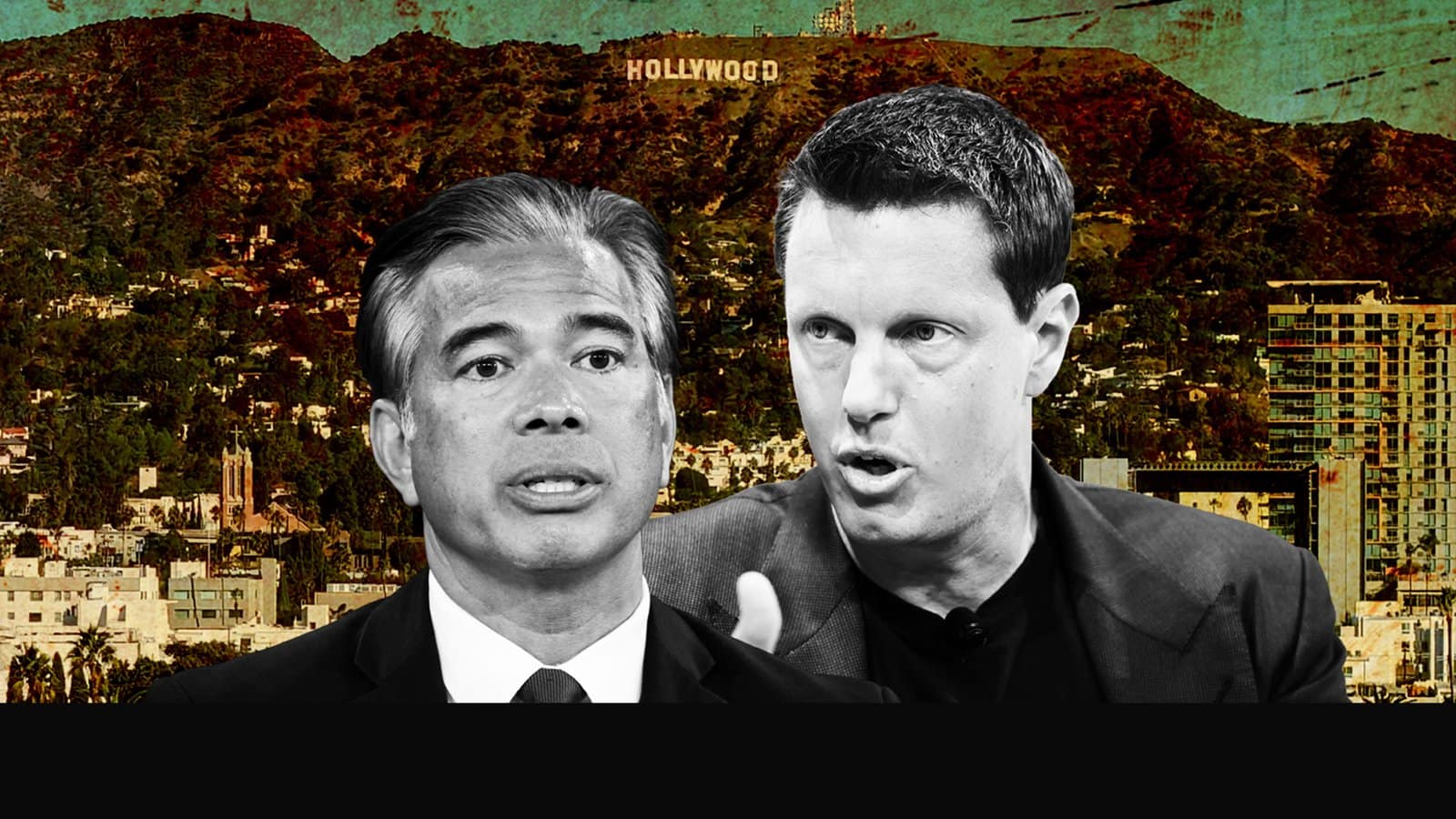
Editors’ Note: On July 13, California, New York & 10 other states sued to stop Paramount Skydance’s planned $111 billion acquisition of Warner Bros Discovery. Last week a federal judge dealt the David Ellison-run Paramount a blow by setting the much anticipated antitrust action for a two-week trial in March 2027. Amidst recent ParaBros merger endorsements from TKO boss Ari Emanuel, former cable news anchor Chris Wallace (both of whom have deep financial connects to Paramount) and exhibitor executives, plus a CNN-centric NYT op-ed from Ellison himself, big-screen release pledges and more, California Attorney General Rob Bonta has become Public Enemy No.1 for Paramount and WBD. In an exclusive guest column for Deadline, he warns Hollywood and others not to be distracted from the facts of the states’ case and the fate of the deal.
***
Watch on Deadline
Despite the spin you may have heard in recent weeks, the lawsuit my colleagues and I filed challenging the Paramount Skydance and Warner Bros Discovery merger isn’t about trusting the intentions of one company or one man.
It isn’t about trusting that CBS News and CNN will remain independent and credible under one umbrella.
It isn’t about the future of streaming.
This lawsuit is about antitrust law. It is a straight up antitrust enforcement case. One that is very cut and dry. One that seeks to prevent the long-term structural impact from the loss of competition. An impact that can’t be remedied with a few one-off, piecemeal promises.
So, while others may try to flip the script and distract from the facts, I will lay out the truth of this case.
The proposed merger — the largest in Hollywood history — would combine two Hollywood titans and create an illegal level of concentration in three markets: film distribution for wide-release films, anticipated blockbuster film distribution, and cable TV. The resulting behemoth would control nearly one-third of theatrical motion picture distribution and nearly one-third of basic cable channels, including 50 of the most popular cable channels.
It would be particularly harmful to the market for anticipated top-grossing films, also known as anticipated blockbusters, such as Mission: Impossible — The Final Reckoning and A Minecraft Movie. The merger would give just four distributors control of more than 90% of these films. That is a big deal, because blockbusters have massive production budgets and account for 88% of box office revenue for films released over the past four years. These films get more people out of their homes and to the movie theater, reminding them of why they love going to the movies in the first place.
Let’s talk about why all of this matters.
Concentration in these markets would mean less competition. Less competition will ultimately result in higher prices, lower content quality, and fewer movies and TV shows. Movie theaters, cable TV distributors and audiences on every sofa and in every movie seat in the U.S. would feel the impact of this unlawful merger.

Take, for example, Warner Bros’ Minecraft and Paramount Skydance’s latest Mission: Impossible, which were released in April and May last year. If the two companies had already merged, would they have released these megahits back-to-back, or would they have pushed one out? Would they both receive massive marketing budgets, or would one take a back seat? Would the production budgets for each have stayed the same, or would one have been cut down? We can’t know the answers, but these are the kinds of concerning questions with industry-wide impacts that our lawsuit intends to prevent.
Competition is core to a thriving economy.
It incentivizes companies to produce their best work, to offer fair prices, and to ensure that companies succeed based on what they offer, not what backdoor deals they can land, connections they can lean on, or because they’ve unlawfully manipulated the market and trampled over competitors leaving consumers with just one unsatisfying option.
When companies scheme to cut competition, costs go up, choices go down, our economy suffers, and every day Americans end up paying more for less. That’s why we have antitrust laws like the Clayton Act. A law that this proposed merger violates.

Right now, Paramount and Warner Bros are spearheading a public relations campaign to spin a narrative that is simply false.
They would have you believe that this is purely politics. It’s not. If it was, we would have been thrown out of court the day we filed. Instead, the judge reviewed our case, saw the merits of our arguments, and issued a temporary restraining order to block the merger. If this was about politics, Paramount and Warner Bros would not have agreed to pause the merger until a judge makes a final decision or until next June, rather than go through preliminary injunction hearings that were likely to go the same way as the temporary restraining order — in our favor.
Paramount and Warner Bros see the writing on the wall: that they will lose in a court of law. So instead, they are resorting to the court of public opinion. They want to talk about anything but the facts of this case. To twist the narrative. To try to confuse, conflate, and convince you that this is about politics, the news, or the future of streaming, when they know perfectly well it is not. When our lawsuit makes it crystal clear that it is not. As disingenuous as it may be, they are welcome to do so.
In the meantime, we will be telling the truth and fighting our case — fighting for American audiences, filmmakers, writers, creatives, production crews, and small businesses — in an actual court.
And we intend to win.
