
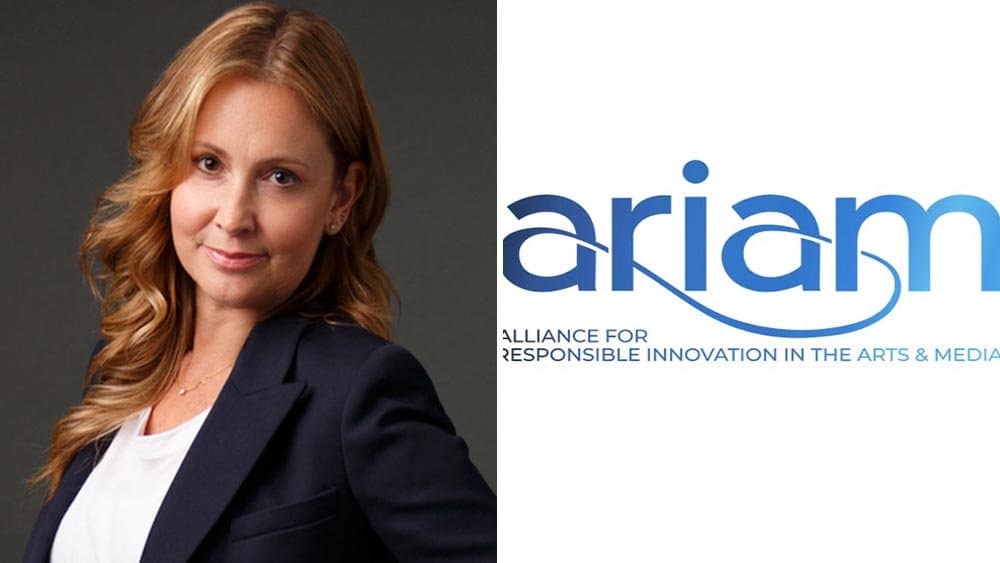
EXCLUSIVE: A new content-focused coalition, The Alliance for Responsible Innovation in the Arts & Media, has launched with Disney, the New York Times Co. and Adobe among its initial members.
The new Los Angeles-based group says its mission is to “ensure that AI is developed and deployed responsibly, sustainably and for the betterment of all society.”
ARIAM’s members include a range of content and tech players, among them Adobe, Advance, BBC, Cambridge University Press & Assessment, Condé Nast, The Financial Times, ITV, The New York Times, Reach, The Walt Disney Company and Wiley.
The organization will operate globally and be led by Victoria Furniss, a former Netflix executive who is CEO and co-founder of The Birdella Group. During a nearly 9-year run, Furniss held multiple legal and public policy exec posts. Prior to that, she spent six-and-a-half years at Warner Bros.
Watch on Deadline
The launch of ARIAM comes as the entertainment industry grapples with the effects of AI, which remains a third rail in the creative community even as some prominent voices have embraced its potential. The group plans to advocate for responsible legal and policy frameworks designed to further AI’s advances but also creating a foundation of protection. The group describes the beneficiaries of this protection as “consumers (particularly children), creators, and, more broadly, our culture, society, and democratic institutions.”
One significant development in recent months has been the ability of the DGA, WGA and SAG-AFTRA to separately reach contract renewals with the studios and streamers. AI protections were included in each of those agreements, helping to avoid a repeat of the labor morass of 2023, when the arrival of ChatGPT ratcheted up industry tensions over copyright protections and the future of the workforce.
“ARIAM’s goal is not to slow AI down but to ensure it is able to sustain the broader ecosystems long term,” Furniss said in a statement. “ARIAM is a first-of-its-kind cross content sector coalition seeking to ensure that AI supports human creativity, respects the rule of law, and safeguards consumers. AI developers have a genuine opportunity to ensure that creativity and innovation both flourish.”
Child safety expert John Carr, OBE, added: “For years, parents, teachers and children have relied on well-known characters, media, and educational materials as safe, dependable guides or sources of entertainment. The irresponsible development and use of AI have allowed these to be hijacked and distorted, turning them into agents of harm. Responsible-by-design development and use of AI tools must be at the heart of the way forward. Parents, teachers and children need to be able to trust again”.
ARIAM is advocating for a shift in how AI is developed to a place where accountability, transparency, and safety are embedded from day one. At the center of that approach is the clear idea that responsible innovation is good for society. Without meaningful accountability, misuse, misinformation, and IP theft will harm creators and consumers.
The coalition said it is working with Damian Collins, OBE. “Using AI to break the law can never be an acceptable excuse,” Collins said. “Laws around personal safety, intellectual property and financial crime still apply in the age of AI. This is why ARIAM has been created and why I’m proud to working with this necessary initiative.”
Among the statements of support issued by ARIAM upon its launch came from Adobe Chief Legal Officer Louise Pentland. “Adobe’s mission is empowering everyone to create,” she said. “We believe creativity is a uniquely human trait, and that AI should amplify human imagination, not replace it. As these technologies evolve, it’s essential that innovation and creator protection advance together. We’re committed to advocating for creator-first policies and to working with the creative community, policymakers and the industry to ensure the creative economy can thrive in the age of AI.”
