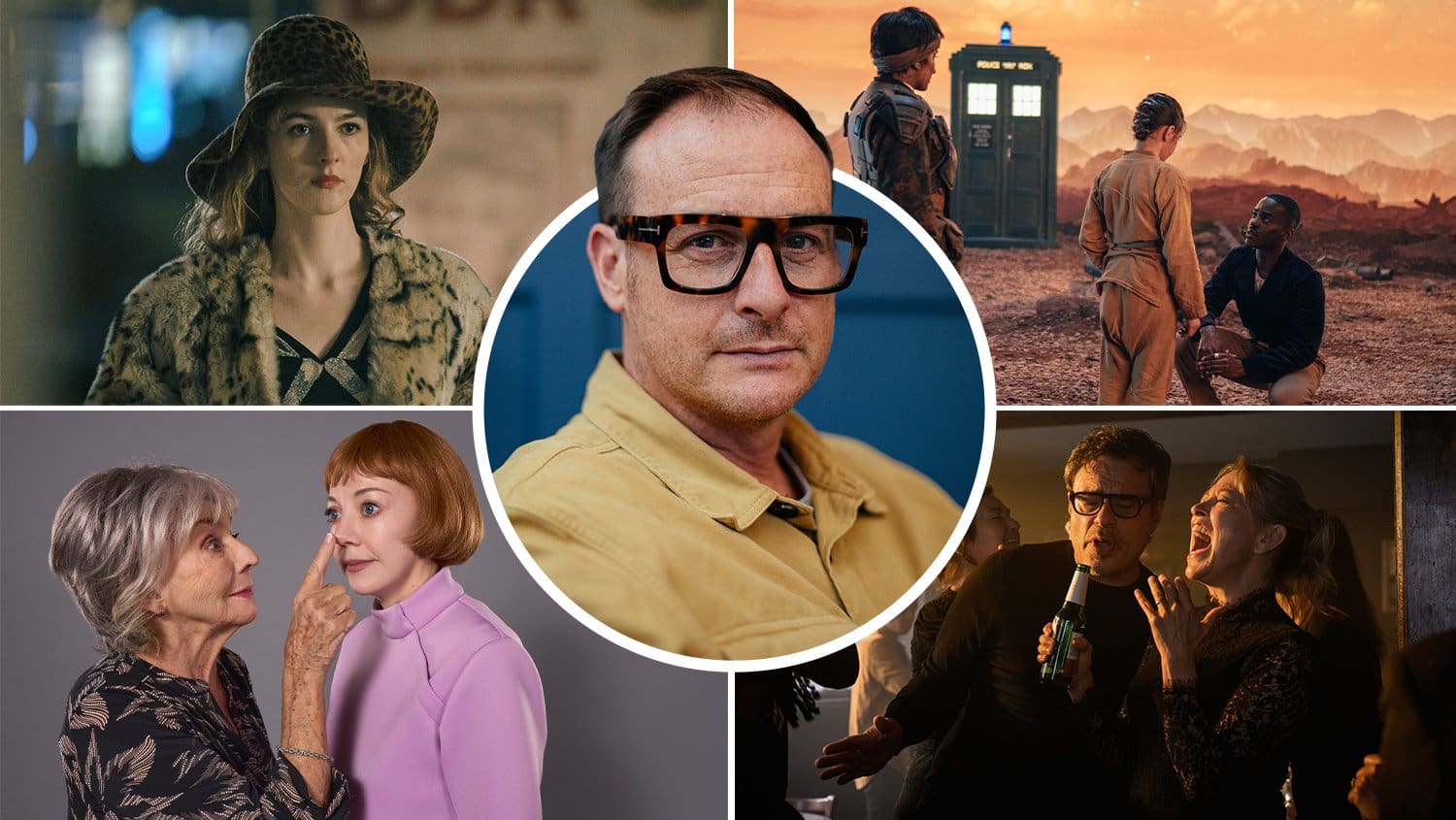
EXCLUSIVE: BBC Studios’ scripted chief has laid out his strategy for future indie and talent investments that will shy away from “going out and spending £20M ($26.5M) on a production company.”
Speaking exclusively with Deadline for his first interview since taking on the Scripted MD role, Jamie Hall said his plan for the Doctor Who, Baby Reindeer and Sherwood maker is instead to strike smaller but more regular deals with top talent and “build creative hubs.” In this vein, Hall said BBC Studios scripted will “move slightly closer” to the strategy of soon-to-be-independent rival ITV Studios.
Hall came to our interview clutching receipts in the shape of two new labels led by the producers behind Strike and The Detection Club, along with early-stage plans for a label that will focus on digital spin-offs of existing brands.
Watch on Deadline
BBC Studios runs hefty in-house drama and comedy teams along with majority-owning big beasts of the UK production world like Baby Reindeer maker Clerkenwell Films, Sherwood producer House Productions, Lookout Point and Steve Coogan’s Baby Cow.
Hall joined earlier this year, three decades on from his first stint at the BBC (he met his wife working on Our Friends in the North)from Vice Studios/Pulse Films, where he oversaw the likes of Gangs Of London. At BBC Studios, his remit is to give a shot in the arm to the drama and comedy offering and unearth the next generation of IP at a time when the public service BBC is desperate for funding. His desire echoes that of his boss, BBC Studios Productions chief Zai Bennett, which is to invest in around two to three of these new-look talent labels per year. Other examples include tie-ups with Barbie star Jamie Demetriou, The Ballad of Wallis Island writerTom Basden, Ted Lasso alum Nick Mohammed and Cunk on Earth creator Diane Morgan.
“I inherited a group of great production companies that had been acquired in the way production companies were acquired at the time,” Hall told Deadline from BBC Studios’ Soho outpost. “But I don’t think the market can support that anymore – or, at least, it can only do so very rarely. We’re not going to spend £20 million buying a production company. Instead, we’re building an amazing service at the center of the studio, then creating creative hubs that can tap into our brilliant lawyers, HR, finance and other support functions.”
He recalled a recent conversation with Joel Wilson, the just-departed co-founder of Sex Education producer Eleven, who told him: “Towards the end of running the company I came to dread the pressure of running a business.”
“All [Eleven] wanted to do was build great shows,” added Hall.
Hall didn’t completely rule out stumping up big bucks to buy an indie outright in the future, but added: “The reality is that I can set up creative pods or labels at a much lower price point, and that feels right.” He said the scripted supremo role at BBC Studios had attracted him because, “I wasn’t simply coming in to mind the wheel. There was a creative renewal that needed to happen – some wiring and plumbing that needed fixing.”
Backing up his strategy, Hall unveiled Bristol-based Landed Productions led by Strike and Possession producer Jenny Van Der Lande, who is leaving her role as Big Talk’s creative director of drama to helm BBC Studios’ first scripted label outside London.
Landed Productions will make “premium genre pieces” and Van Der Lande has multiple writers in mind with whom she wants to develop shows. “Jenny said in our conversations that she doesn’t want to run a production company,” explained Hall. “She wants to work with amazing writers she already has relationships with, then partner up when she gets a greenlight.”
Hall’s new-look team, which consists of the likes of CFO Jennifer Dickson, legal chief Anna Beese and production director Alison Loose, has also been busy working on the digital spin-offs label that follows big digital successes for franchises like Dancing with the Stars and EastEnders. This one, which doesn’t yet have a name, will be led by BBC Studios Drama digital chief Katy Karger. “Scripted is probably the hardest area to crack [in digital], so we’re setting up a central digital capability,” said Hall. “When someone pitches a conventional piece of television, we can also pitch to buyers a digital component.”
Hall also unveiled CliffEdge Entertainment, led by “real grafter” Deborah Sathe, who is moving across from her role as Senior Creative Director at the in-house BBC Studios Drama Productions. CliffEdge will take some shows off Drama Productions’ hands such as The Detection Club, Silent Witness, Father Brown and Shakespeare and Hathaway, while the Kate Oates-run Drama Productions will continue making soaps and continuing drama. Some staff will move over to CliffEdge.
“When I came in, I spent a lot of time getting to know all the creatives in the business and Deb Sathe was one of the people who really impressed me with her energy and what she was building,” added Hall. “She’s a real grafter, but is also incredibly disciplined about making shows at a certain price point. It felt natural for her to have her own entity to run.”
CliffEdge comes replete with a greenlight: an adaptation of Vanessa Savage’s gripping thriller The Night They Vanished starring It’s a Sin’s Callum Scott Howells and Gabrielle Creevy (Black Doves). That one has been pre-bought by Channel 4 and follows Anna (Creevy), whose world is blown apart when she discovers her childhood house listed on a true crime website as the scene of her family’s future deaths. Intriguing blind date Cai (Scott Howells) runs the true-crime site, but he swears he didn’t post it.
“I’ve done the rounds of most of the agencies”
The Night They Vanished speaks to what Hall believes BBC Studios can do with big IP.
He says he has “done the rounds of most of the agencies to remind them that we’re open” – the day after he chats with Deadline he has a meeting in the diary with Curtis Brown – and is in talks over “a number of pieces of IP that are coming through which are quite interesting.”
Driven by the success of Sky and AMC’s Gangs of London, for which he says Pulse was “a bit ahead of the curve,” Hall is chatting to rightsholders about the possibility of revamping in-vogue gaming IP for the small screen. This follows big successes for the likes of HBO’s The Last of Us.
Although none of these examples are necessarily franchise-able in the vein of a Gangs of London or Doctor Who, Hall reels off a list of upcoming BBC Studios shows he is buzzing for, including the BBC’s Killing Eve origin story Honey, Netflix surfing drama Breakers and a second season of Disney+ rom-com Alice and Steve.
Another hit dominating ratings at the moment is Diane Morgan’s comedy Ann Droid, which poignantly taps into societal paranoia about AI but in an oh-so-gentle way. Having yesterday become the BBC’s biggest new scripted comedy since Ludwig Season 1, Hall reveals there is “real interest” in Ann Droid from American buyers, who are familiar with Morgan from her work as comedy creation Philomena Cunk and could either buy finished tape or commission their own unique version.
Hall has plenty experience working for American behemoths and will soon sit down with BBC Studios’ new L.A. chief Ryan O’Dowd to figure out “how we can be better joined up, because inevitably our producers [in the UK] want access to the U.S. market.”
This comes at a time when Hall says the co-pro market is “picking up a bit” from the lows of 2025, although he acknowledges it is “nowhere near what it was in the past and there is still quite a big oversupply in the market of producers and projects.” “If we’re designing a show and the budget is at a [higher] level then we need to start thinking about [co-pros] much earlier in the process,” he added. “What has happened in the past is you develop a show for [BBC drama boss] Lindsay [Salt] and she says she wants it and then you go, ‘Oh crap we can’t finance it with just Lindsay and the tax credit, we need co-pro’. But by then the show has been developed in such a distinct way.”
He hopes his experience in the belly of the beast at Vice can help but is so far loving being part of a public service machine, which Hall labels the fourth biggest brand in the world. “Our ultimate owner is the epitome of patient money,” he said. “Whereas when I was at Vice it was owned by three American banks and if we didn’t hit our numbers each quarter we were in trouble.”
This unique BBC model helps in the current landscape, Hall reckons, coming as the Banijay-All3Media mega-merger marches on.
“I imagine that if you’ve got a super-indie with 130 production companies, the amount of facetime you’re going to have with the boss is quite minimal,” he added. “What I really lean into is the way we’re structured. Zai [Bennett] and I sit opposite each other, across a bank of desks. We don’t have to wait for L.A. to wake up before we make a decision; we can just get on with things.”
“Just getting on with things” is a crucial mantra for a BBC Studios scripted operation that is feeling more and more pressure to return funds to the cash-strapped 100-year-old national broadcaster.
Is Hall feeling the pressure?
“There’s no denying that any headwinds the BBC faces will come and hit us,” he added. “All I can do is manage that and focus on where we can grow our business outside of that [traditional BBC funding] route to help compensate. The BBC gets beat up so much. What we can do inside the studio is really help it and support it.”
