
Amid the resurgence of Japanese cinema on the international festival circuit over the past few years, one resolutely indie banner, Bitters End, has been quietly growing its profile across production, distribution and international sales.
Founded three decades ago by producer-distributor Yuji Sadai, the company is more of a highly-regarded veteran than a snappy startup, but has managed to stay at the forefront of bringing international arthouse cinema to Japanese audiences – as well as taking new and established Japanese filmmakers to the world.
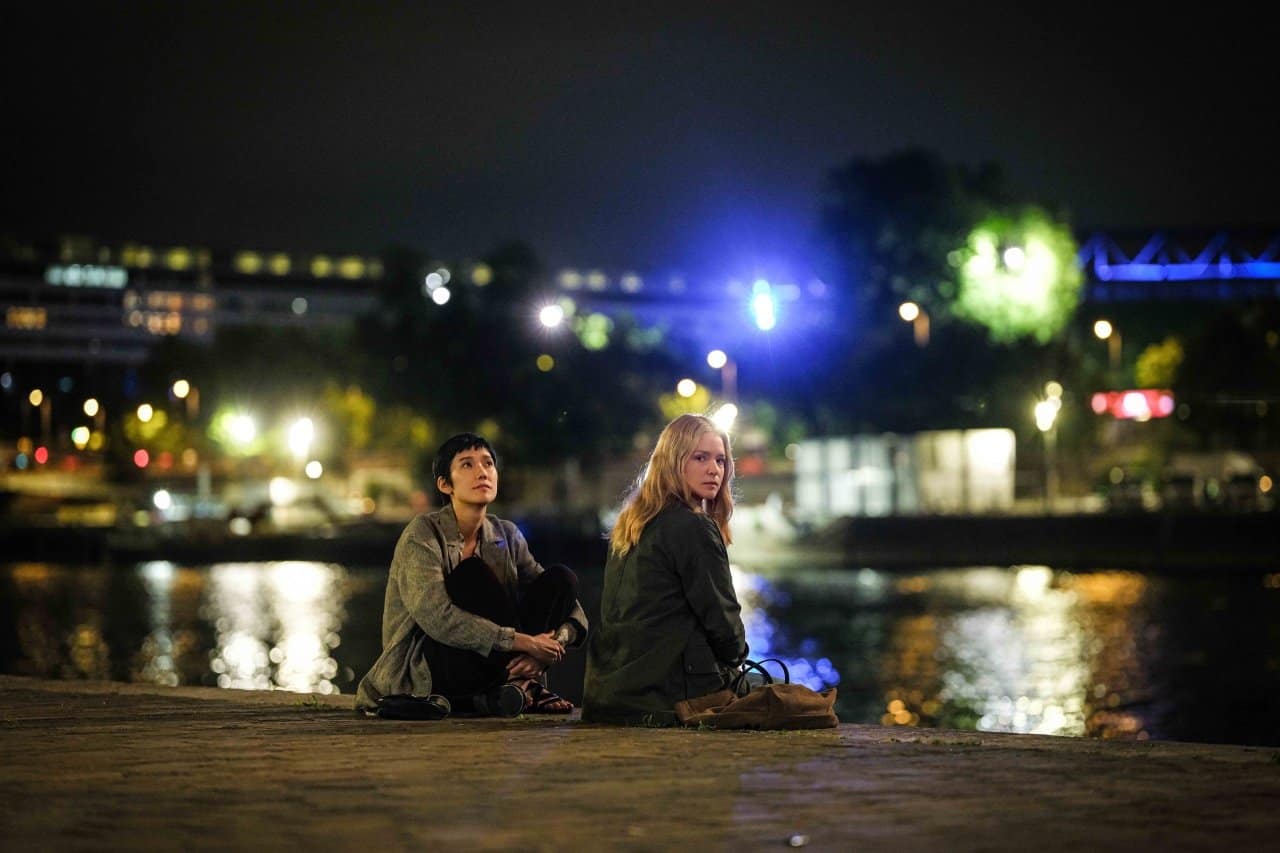
The company had two films in Cannes official selection this year – Ryusuke Hamaguchi’s competition title All Of A Sudden, which it co-produced and split sales duties with Cinefrance Studios, and Yukiko Sode’s Un Certain Regard title All The Lovers In The Night, which it both produced and sold. All Of A Sudden, which was Hamaguchi’s first film made in France, extends a long association between Bitters End and the filmmaker stretching back to his early Cannes title Asako I & II, and his Best International Feature Oscar winner Drive My Car.
In addition, as the company expands its international sales activities under Head of International Business, Sayaka Ito, it has also picked up In My Father’s Room, the directing debut of celebrated writer Maha Harada, which has been selected for main competition at the upcoming San Sebastian International Film Festival.
Watch on Deadline

Speaking to Deadline on Zoom from Tokyo, Ito describes the expansion into sales as a “natural and organic move” for the company, “as we were already involved in the life cycle of a film, from production and financing to domestic distribution and marketing.”
She adds that there’s also a solid business motivation behind the move as Japan’s arthouse market has “become increasingly challenging, making it more difficult to recoup production costs through the domestic market alone”.
Of course, this is an experience shared by many Japanese specialist producers and distributors. Japan may be one of the few international territories to recover to pre-pandemic box office levels, but most of the spoils are going to local anime and franchise content, while the country’s storied arthouse cinema circuit, once the envy of the region, continues to contract.
But at the same time, Japan is in the fortunate position of having a lot more to offer the international arthouse circuit these days. “We’ve seen a new generation of highly talented Japanese filmmakers emerging over the past few years, and we believe it’s important to ensure that their work reaches international audiences,” Ito says.
Japan’s new generation has been one of the sensations of the festival circuit since it booted up again in real life following the pandemic. After years in which just a handful of established names – Hirokazu Kore-eda, Naomi Kawase, Takeshi Kitano and Kiyoshi Kurosawa – were appearing at major festivals, a host of new filmmakers have recently broken through. Cannes selected seven new Japanese films for last year’s edition, and around the same number this year, while other major festivals including Berlin, Locarno, Venice, Toronto and San Sebastian are also paying attention to Japanese cinema, with directors including Hamaguchi, Koji Fukada and Sho Miyake leading the charge.

Bitters End has been involved in many of these titles in different capacities – producing or taking part in the production committee behind the film; handling international sales for films it has produced, as well as third-party pick-ups; and also distributing films in Japan. In some cases, it handles Japanese distribution for films produced by other companies, with recent examples including Wim Wenders’ Perfect Days, Kiyoshi Kurosawa’s Wife Of A Spy and Neo Sora’s Happyend.
Increasingly, the company takes on all three roles, as was the case with All The Lovers In The Night and the three films it had playing in San Sebastian in 2025 – Miyake’s Two Seasons, Two Strangers, which won Locarno’s Golden Leopard before playing in San Sebastian’s Zabaltegi-Tabakalera section; serial killer fable Sai: Disaster, co-directed by Yutaro Seki and Kentaro Hirase, which premiered in main competition; and Yukari Sakamoto’s White Flowers And Fruits in New Directors.
Ito explains the company is not completely new to international sales – as it has handled a few titles it also produced over the years, including Shinji Aoyama’s Helpless and Nobuhiro Yamashita’s cult classic rock film Linda Linda Linda – but expanded this activity when she rejoined the company after a brief hiatus with streamer U-Next in 2023.
While acknowledging that it’s a tough time for the international arthouse market, Ito says the company has managed to leverage the relationships it has built with distributors, sellers, producers and festivals around the world over the past three decades, as well as to tap into the buzz around the Japanese new wave.
“There’s now a growing number of people who are interested in Japanese cinema, so we’re seeing more representation at an international level of both new talent and auteurs. We’re also seeing more companies that don’t usually buy Japanese films reaching out to us, or at least being more open to acquiring Japanese titles. So we think that’s a good sign.”
Among recent sales successes, Hamaguchi’s All Of A Sudden was pretty much sold out worldwide by Cinefrance and Bitters End (which handled Asian territories) before it even played in Cannes. Sode’s All The Lovers In The Night, based on Mieko Kawakami’s novel about first love and false appearances, has so far been sold to 12 territories including Several Futures for the US and Ritual Films for Canada.
“We believe Sode is also one of the most important filmmakers working in Japan today. With All The Lovers In The Night, we were able to combine her distinctive artistic voice with recognizable elements such as leading actors Yukino Kishii and Tadanobu Asano, and Kawakami’s novel,” Ito says.

Two Seasons, Two Strangers has been sold to 15 territories, including Several Futures in the US. “Miyake had previously presented films at festivals including Berlin, but we felt that his international profile still did not fully reflect his importance as a filmmaker,” Ito says. “The Locarno win allowed his name and work to reach a much broader global audience.”
Staying Indie In A Corporate World
What’s also unusual about Bitters End is that the company has managed to retain its independent status over three decades, without accepting any major outside finance – no small feat in a market where smaller companies tend to get swallowed up by studios or slowly fade away.
Sadai, who prefers to keep a low profile and let the films do the talking, founded the company in 1994 after working in curation and distribution, naming it after the 1972 Roxy Music song (with the name also encapsulating the spirit of striving to the “bitter end”).
The company started out distributing international films in Japan – the Dardenne brothers say Sadai was the first buyer to pick up their films – and has since released around 300 titles, working with a ‘who’s who’ of international arthouse cinema, including Jia Zhangke, Bong Joon Ho, Fatih Akin, Nuri Bilge Ceylan, Bela Tarr, Otar Iosseliani, Roy Andersson, Gianfranco Rosi, Mikhael Hers and Alice Rohrwacher.
Bong’s Oscar winner Parasite is the company’s biggest ever release, grossing more than $40M in early 2020. Ito says it could have gone even bigger if the pandemic hadn’t hit.
The company also works with Universal Pictures on its more specialist titles, including Manchester By The Sea, Anora and Oppenheimer – with the latter film resulting in a relationship with director Christopher Nolan that extended to also releasing The Odyssey this year.
Sadai stepped into co-producing and investing in both local and international films back in the ‘90s, at a time when few Japanese companies got involved in international co-production. In addition to working with Japanese filmmakers such as Shinji Aoyama, Nobuhiro Yamashita and Naomi Kawase, he also co-produced the early titles of filmmakers including China’s Jia Zhangke, Iran-born filmmaker Amir Naderi and Kyrgyz director Aktan Arym Kubat. Bitters End was also a co-producer on anthology film Tokyo!, with sections directed by Bong, Leos Carax and Michel Gondry.
Ito describes Bitters End’s taste as “director rather than genre-driven” and explains that the company tends to work with the same filmmakers over many years, patiently introducing their body of work to Japanese audiences: “We place great importance on a filmmaker’s individual voice and consider artistic quality, social and cultural significance, and the commercial potential all at the same time.
“We rarely select films because a particular genre or trend is currently popular. We don’t specialize in genre cinema, although we’re open to genre films when they have a strong and distinctive directorial vision. Many of the films we handle are human dramas. They may address social or political subjects, but they tend not to present their messages in an overly explicit or didactic way.”
Those choices can be seen in the company’s current and upcoming release slate in Japan, which in addition to The Odyssey, All Of A Sudden and All The Lovers In The Night, also includes Fatih Akin’s Amrum, Gianfranco Rosi’s Below The Clouds and The World Of Love from Korean filmmaker Yoon Ga-eun. The company is also leaning into classics with current releases including 4K restorations of Ryusuke Hashiguchi’s All Around Us and Hush!
Meanwhile, on the sales front, Ito is getting ready to launch In My Father’s Room at San Sebastian, a festival that has become an important launchpad for the company’s productions and acquisitions.
Based on Harada’s short story An Unnecessary Man, the film revolves around a young woman working in a museum who is handed a key to a room she wasn’t aware of following her father’s death. While retracing the steps of a man mostly written off by society, she discovers his deep appreciation of art, antiques, poetry and Japanese tea ceremony. Yu Aoi (Wife Of A Spy), Issey Ogata (Silence), Eita Nagayama (Monster) and Eri Watanabe (Shall We Dance?) head the cast.
“The film has strong authentic Japanese elements, but also features the paintings of Mark Rothko, so it combines Western and Japanese culture in a way that resonates visually and spiritually,” Ito says. “We feel it’s a perfect fit for European festival audiences.”
Without giving too much away, Ito also shares that the company’s upcoming slate includes a film from an acclaimed French director shooting in Japan, as well as some features based on original stories from debut Japanese filmmakers. “We also have an international co-production project with Asian partners currently in development. We hope to support both established directors taking on new challenges, as well as talented emerging filmmakers,” Ito says.
