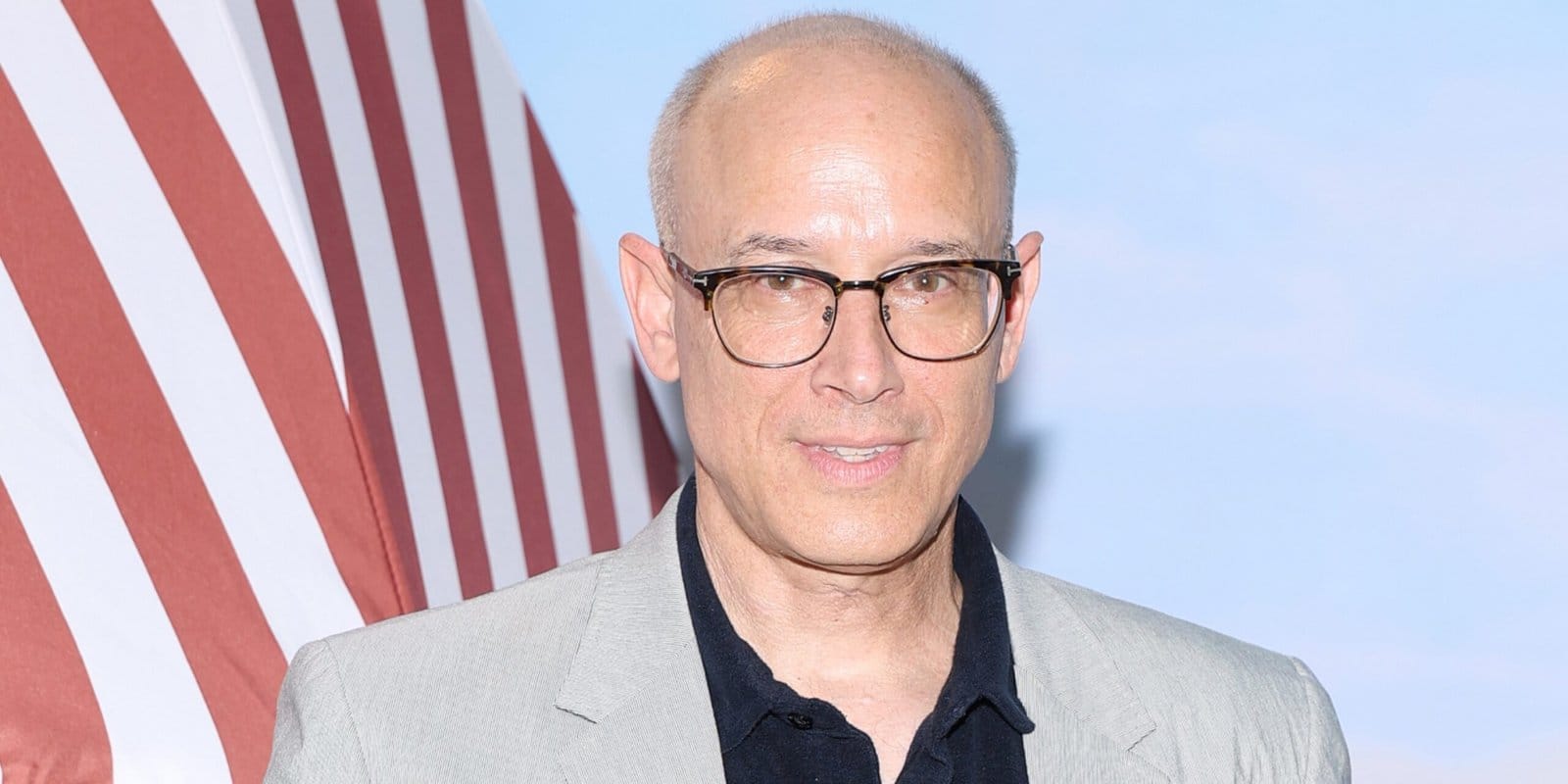
David W. Zucker has been comparing the pilot season system to the modern era’s commissioning free-for-all.
In an interview with Deadline, the executive producer of The Terror: Devil in Silver and Alien: Earth, compared the certainty of pilot season versus the current system, where “plugs get pulled on productions at any juncture.”
“We used to be a seasonal business and, as much as a lot of us back in the pilot season era used to gripe against the mad reality of that chaos and hysteria, you knew by May a decision was going to be made,” he said. “You may like it, you may not, but they had to make a choice.”
During the pilots era, Zucker was EP on the likes of CBS’s crime series Numbers and legal drama The Good Wife, and also worked on cable shows including Gettysburg, Killing Lincoln and Klondike.
Watch on Deadline
With less certainty in the market in the modern era, where shows are developed and greenlit across the year, writers and actors can be left in limbo, he added. “I would say crisis probably isn’t a wrong-headed term,” said the veteran producer.
Zucker, the Chief Creative Officer of Scott Free Productions, was talking to Deadline during an appearance at the Italian Global Series Festival.
He is currently exec producer on Season 2 of FX’s Alien: Earth and has seen Devil in Silver, the third season of the revived horror series The Terror, launch on AMC Networks’ streamer Shudder. Starring Dan Stephens, it follows a man who is wrongly committed to a psychiatric hospital, where supernatural forces reside. The show debuted in May.
Zucker noted the move to play it first on Shudder and AMC+ concurrently was new for AMC.
“This gives us a longer ramp up to when they put it out on linear – a different way of trying to keep it into the conversation and hopefully expanding viewership,” he explained.
Elsewhere in the interview, Zucker updated on Alien: Earth‘s production at Pinewood Studios in London, the upcoming Prime Video series Blade Runner 2099 and the status of Vatican City, Scott Free’s latest collaboration with The Good Wife creators Robert and Michelle King.
Read the full interview here.
DEADLINE: What does the fact that The Terror: Devil In Silver played first on AMC+ and Shudder, a premium but niche genre service, say about the way networks and commissioners in general are thinking about the shows they buy?
David W. Zucker: It’s a great question that honestly I have very little visibility into. AMC shared with us this release strategy, which is one they’ve never done before. They were very clear in terms of the thinking of the strategy, which one can only defer, because we have so little visibility into how any of these streamers sort of assess their audiences and their data.
Those kinds of historic conversations that we would always have – debating about the publicity, the marketing and such [are over]. We’re living with a fairly myopic view of the why and whether that’s the best way of going, but this certainly made a lot of sense in the sense of providing it to that viewer already strongly predisposed. As they shared, this gives us a longer ramp up to when they put it out on linear – a different way of trying to keep it into the conversation and hopefully expanding viewership.
When they put Terror 1 onto Netflix, there was another boom there, and even when it premiered in the UK, which was long delayed and we had no advance that that was going to happen, suddenly it enjoyed a whole new life.
It’s a long-winded answer to your question. We’re along for the ride, and trying to ask the right questions and make, hopefully, thoughtful suggestions.
DEADLINE: You’ve talked about there being a global industry crisis. I wonder if you can give me a bit more color on what you mean by that and what producers need to operate in this current climate?
DWZ: One thing that’s absolutely undeniable – and there is not a producer or director, writer or representative I talked to who feels differently – we are in an era where things are taking twice as long to accomplish half as much. That is a crisis in the sense when you combine it with the unrelenting unpredictability of how and when or why decisions are made.
You cannot have any reliable sense of employment – what’s changed in the last five or six years is the plugs get pulled on productions at any juncture, including in some instances, those programs not even being released. A fundamental contributing factor to that is there is nothing in most instances now that instigates decision making.
We used to be a seasonal business and, as much as a lot of us back in the pilot season era used to gripe against sort of the mad reality of that sort of chaos and hysteria, you knew by May a decision was going to be made. You may like it, you may not, but they had to make a choice. We have really turned into the film business where you don’t necessarily have any clarity or understanding of how or why your material may be assessed, or when they may come to some conclusion about it.
I really wish there was a way to put a timetable on decision making. We have a number of projects that have been on the precipice for quite a long time, and I don’t know how people can make a living that way: Writers standing by, actors wondering whether that’s what they should commit to or not. I would say crisis probably isn’t a wrong-headed term.
DEADLINE: And is there a flip side to all of that happening? Is there a positive to the way things have changed?
DWZ: Absolutely. If we’re going back to the rise of the streaming era, it’s become now, particularly for those of us who’ve worked in the U.S., a truly global medium. I remember around the 2000s, when you couldn’t even have subtitles or foreign characters on American television, until Heroes and Lost did it. I mean, that was only 25 years ago.
From a content standpoint, the breadth of shows and films that now are accessible and and thriving, I think there’s no question that’s an enormous benefit. And if you were going to try to hire people from Europe or from Asia who didn’t have experience in the U.S., that was a non-starter. That’s not the case anymore.
DEADLINE: Why do you feel the types of shows you and Scott Free have produced over the years such as The Good Wife, which seem to mix premium scripted TV tropes with more traditional network fare, have been so popular?
DWZ: We’re just talent-facing first and foremost. It’s always been a perilous venture to be guided by a marketplace – and particularly in a time like this where what we may try to present to buyers today or what we might develop that’s informed by buyers may be entirely off the table in two months. The only way of existing in this creative space is to rely upon those artists, writers, directors and actors who have something that they’re passionate to bring forward.
We align and work in support of that, and then hope the timing’s fortuitous. That’s how it’s always been, to be honest, even in the pilot era. In some ways, the battles are not any different. It absolutely begins and ends with the writer and and the vision that he or she is bringing to story, and then you hope to find that one buyer or entity that connects and has the same enthusiasm and eagerness to bring it forward.
DEADLINE: I spoke to Noah Hawley earlier this year when the production for Alien: EarthSeason 2 was just about to start, and he was crewing up and casting up in London at Pinewood. Have you been to the set?
DWZ: We started two weeks ago. I was just there for the first week of shooting, and I stayed in London for the following week as well. Thailand [where Season 1 lensed] was a brilliant experience and we really benefited immensely from the crews, from that culture and that community, but there’s also no denying that in London you have the true blue chip artisans. I never thought we would be making movies on television, but that is at that scale of what FX and Disney have provided in support of that project. It’s a whole other level and it’s pretty awesome to see.
DEADLINE: A number of Game of Thrones actors have been cast in recent weeks and months. Can you say anything more about more casting at this stage?
DWZ: I think those announcements are coming out periodically, but the field continues to expand and evolve in really thrilling ways.
DEADLINE: What about Blade Runner 2099? It’s been ‘upcoming’ for quite some time now… when is it ‘coming’?
DWZ: It’s fair to say, as we get to Comic-Con in the next couple of weeks, that will begin to inform what’s ahead of us. All of that is beginning to settle in place now, but we’re in the process of finishing. We’re coming down the home stretch.
DEADLINE: What is the status of Vatican City, the CBS Studios series that announced sort of towards the end of last year? That’s a continuation with your relationship with the Kings. How’s that one developing?
DWZ: Sadly, that one is seeking a home. It is a great, great project and the reception to it was everything that we could have possibly wanted. It’s honestly hard to understand how that show is not greenlit somewhere, but that’s not gonna prevent us from continuing to make the effort.
DEADLINE: We’re about to see a new era begin in Hollywood with two of the big studios getting together, both of which you’ve had dealings with through shows such as The Good Wife and Raised By Wolves. What’s your read on how that might change things for both for producers and for the industry more generally?
DWZ: That is the magic question, isn’t it? It’s in many ways the impossible question because other than other than recognizing and acknowledging that tomorrow will be nothing like today or yesterday, you have the confluence of what’s going on both institutionally with the mergers and what’s being perpetrated in Wall Street. We have this extraordinary surge of creator content through YouTube and other platforms and the very aggressive rise of AI and how that will both facilitate and disrupt the process of making content, and then we are also in a geopolitical time that is unquestionably affecting both what content is appealing to viewers and at the same time content that the powers that be are comfortable providing without taking risk to their own businesses, to put it diplomatically.
DEADLINE: A final one for you, in terms of your development slate, is there anything else upcoming that we should sort of be aware of that you’re excited about?
DWZ: I wish we could have this conversation in about two months or even in a month. We’re on the precipice of a number of projects where we’re anticipating green lights. I don’t want to shorthand anything for you at this point without being able to represent it properly, but I would say by the end of summer. You can appreciate my hesitation, because some of these projects we thought were going last year. With Vatican City, we were building toward a production in Rome. We thought we were on that trajectory and, um, and then it took a turn. We’re eager to share more as soon as it’s real. I think we live in a binary time now. It’s like, ‘Are you ordering it or are you not?’ Everything else is just chatter.
This interview has beed edited and condensed for clarity.
