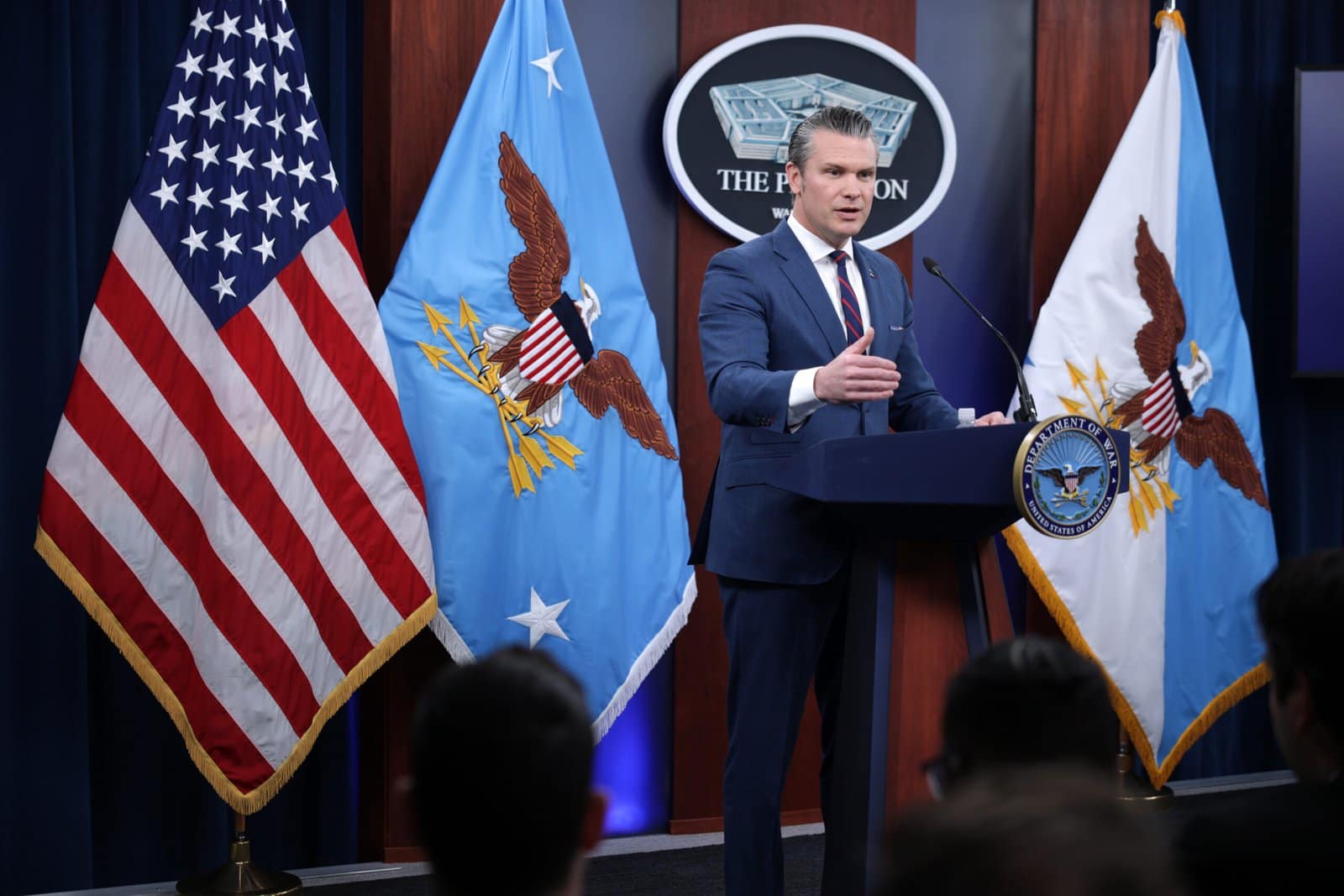
A federal judge handed another victory to in its challenge to Defense Secretary Pete Hegseth‘s more restrictive press policies, this time sidelining a rule that any journalist must have an official escort in visits to the Pentagon.
In granting a preliminary injunction to the Times, U.S. District Judge Paul Friedman sided with the Times’ contention that “their ability to interview varied sources from across the Department, engage in spontaneous conversations, and develop relationships with sources—which the record evidence demonstrates are essential aspects of covering the Pentagon—is inescapably burdened by the requirement to obtain, in advance, an escort for each and every visit to the Pentagon.”
Read the judge’s decision on press access to the Pentagon.
Watch on Deadline
In March, shortly after a federal judge ruled that a previous set of Hegseth’s press restrictions were unconstitutional, the Pentagon implemented a new set of interim guidelines, including the one requiring press escorts. Friedman also struck down a number of those new restrictions, but the escort policy has remained in place as the Pentagon pursued an appeal.
Last month, the Times sought to block the press escort policy, as its attorneys wrote that the Pentagon’s restrictions were retaliatory, designed to punish news outlets for publishing stories that they disfavor. In his ruling, Friedman cited Hegseth’s statements attacking the media, including remarks in which he called coverage an “endless stream of garbage” and to the “legacy Trump-hating press.”
The judge also rejected the Pentagon’s rationale for the policy as “facially dubious,” including that it increased the risk of journalists obtaining sensitive information. The judge wrote, “Why would it be that the timing of a journalist’s question increases the likelihood that a Department official would disclose classified information? Is the implication that a Department official is more likely to divulge such information while, say, in line at Starbucks? Based on what? The Department offers no answer to these questions.” The judge noted that the Pentagon, at 6.5 million square feet, includes thousand of
“cleaning and maintenance professionals, contractors, consultants, representatives of other government agencies, and retail and cafeteria workers, who move around areas of the building unescorted every day.”
Chief Pentagon spokesman Sean Parnell posted a statement on X: “Unescorted access to the Pentagon allowed journalists to observe activity patterns and develop relationships that contributed to repeated unauthorized disclosures of operational plans and intelligence. The court’s order effectively restores that risky environment at a time when protecting our military’s secrets is more critical than ever.
“The Department has a duty to safeguard classified information and our warfighters. We will appeal this decision in order to restore the Department’s ability to secure the Pentagon Reservation and prevent further harm to national security.”
A Times spokesperson said, “Today’s well-reasoned decision reaffirms the First Amendment rights of the press to cover the Pentagon without restrictions designed to prevent the public from knowing what the military is doing. The court recognized that the Pentagon’s hastily implemented new policy was a clear violation of the Constitution.”
