
SPOILER ALERT: This interview contains plot details for Netflix Games‘ Unhinged.
Hollywood and the video game industry have spent years borrowing from one another, recruiting top talent and adapting stories in pursuit of true cross-media convergence. Yet despite the rise of cinematic games and a steady stream of game-to-screen adaptations, the two mediums have largely remained distinct experiences. Netflix Games and Night School Studio’s latest title, Unhinged, is among the clearest recent attempts to blur that line and prove that this is one call you don’t want to miss.
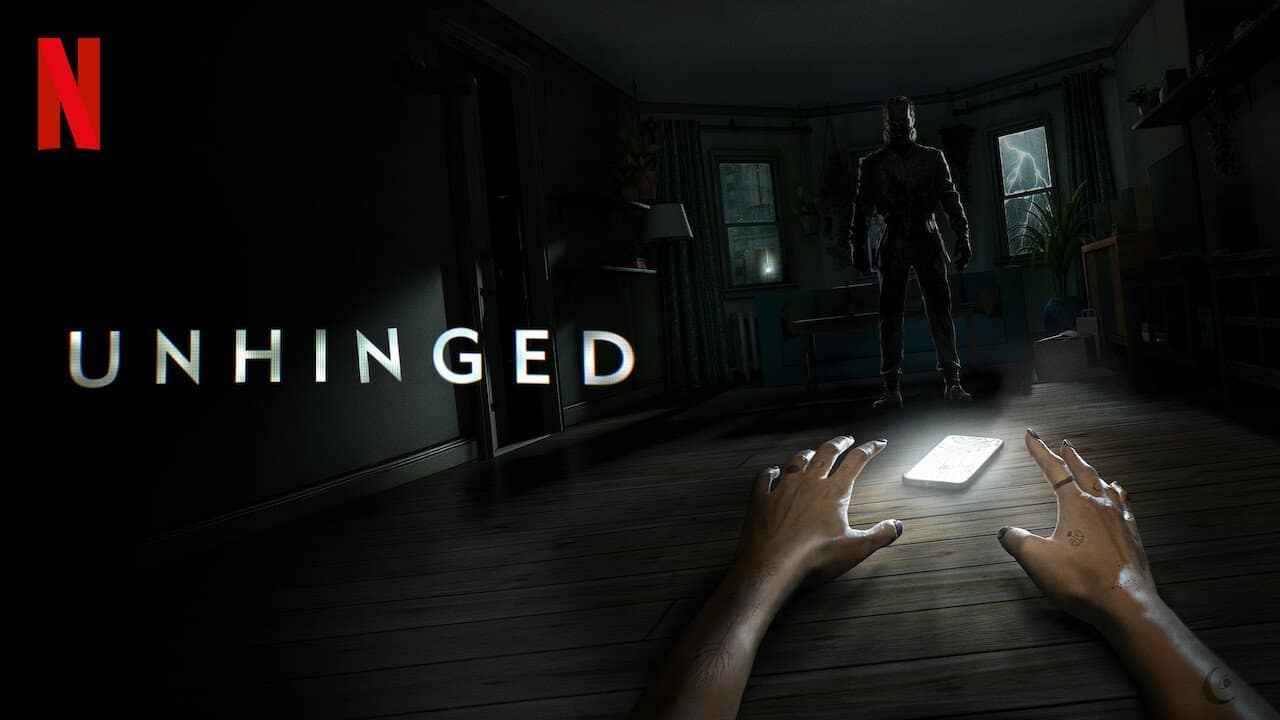
Part thriller, part horror experience and part interactive film, Unhinged drops players into the middle of a Category 5 hurricane bearing down on South Carolina. Zoë Kravitz stars as Ava, a young woman attempting to flee her apartment complex after a power outage. Safety appears within reach as her best friend Claire, voiced by Sadie Sink, races through the storm to pick her up. But when an seemingly unsuspecting superintendent, played by video game veteran Troy Baker, begins hunting her through the darkened building, Ava’s escape quickly spirals into a nightmare.
Watch on Deadline
The roughly 30-minute experience marks Night School’s first major horror title under Netflix following the studio’s 2021 acquisition and projects including Oxenfree II and the Black Mirror tie-in Thronglets. Built around Netflix’s growing emphasis on interactive storytelling, Unhinged transforms the player’s phone into both a controller and a lifeline. Real-world movements guide Ava’s flashlight through shadowy hallways and abandoned apartments, while calls and texts from Claire arrive directly on the player’s device. Meanwhile, a chilling soundscape from composer Jason Hill (Mindhunter) and sound designer Ren Klyce (Hoppers) bleeds through the television, creating an immersive two-screen experience that feels equal parts movie, game and a real-life horror scenario.
Here, Deadline spoke with Netflix Games GM of Narrative Games Sean Krankel and Night School Studio Game Director Sam Warner about building Unhinged, recruiting its star-studded cast and why they believe the future of interactive storytelling may be in the palm of your hand.
DEADLINE: What was the process of developing this game?
SAM WARNER: We started with a flashlight. We loved the idea of using your phone as a physical extension and immersion tool. From there, we decided the horror-thriller genre was a good space for us to play in. Then we looked at what it meant if you had the flashlight in your hand. And asked ourselves what are other things that feel like good accompaniments to a horror game? So, we landed on the phone and thought – wouldn’t it be cool if your phone was your phone but also your controller? In addition to having interplay between two screens, can we have characters from the game world call your phone? And that led us to a story that puts you in a very grounded, familiar starting point that goes off the rails from there.
SEAN KRANKEL: When we first started looking at how to make games for TV using a phone, it seemed very restrictive. We didn’t know how it was going to work. So, we tried to figure out how do we flip that directive on its head, and what can we use inside of a phone that feels exciting to push a story through? Ultimately, Night School is focused on letting people interact with a story in a brand-new way, and we want people to talk about the stories through the lens that they would talk about the logline of a normal movie. It’s not about this particular roguelike genre that we’re adding to. It’s much more like, “Did you play the crazy home invasion thing?” [Laughs.] That’s how we want people to think about it. We go, what are the methods by which you can interact with the story that way? We borrowed from things like Disneyland rides and how they’re designed, or escape rooms, as much as we borrow from video game design.

Netflix Games/Night School Studio
DEADLINE: Things that are really immersive.
KRANKEL: Yes. And things where there’s no threat of feeling like you’re going to be bad at it when you start playing. That’s a giant wall for a lot of people. They’re like, have you played this first-person shooter before and gotten your ass handed to you a million times? And I don’t want to do that. But if you go on a Disneyland ride, you don’t expect to be good at it. It’s a giddy moment before you go in. Or an escape room. You may think the people you’re going with might argue, but you’re not thinking: “I’m not good at them.” For this, we went, how do you play a story where the things you get to do are super intrinsically understood? A phone ended up being the perfect thing for that.
We also really liked the idea of being subtractive in what you’re allowed to do. When we started building it, we had everything and the kitchen sink in there. We had branching dialogue, the ability to free walk, all this stuff. We had a fake phone UI with too many apps. We thought we were so clever for sticking it in there. Then you realize it slows things down. It’s not elegant. It doesn’t make it fun. We wanted to make sure there was never a bad shot in the game. How many first-person games have bad shots? Most of them. That gave birth to a story idea built around those mechanics. We thought maybe we set it in the woods or somewhere else. Then we went, wait, if people are playing it at home, what an awful feeling to turn this thing on and go, let’s have a home invasion game. Let’s literally have the game invade your home. [Laughs.]
DEADLINE: What were your checks and balances on fear?
WARNER: We played this game a lot, obviously. Some of the scenes we landed on, like the guts [being dragged out] or the nail [gun tool] at the end, are still prickly. My hair stands up when I think about them. From the moment we conceived the idea to how it shows up on screen, we knew we wanted these to be peaks of horror inside a new product. There are also plenty of moments where we looked to film, games, and genre tropes and said, actually, it’s good for us to have a trope right here. For example, when you were playing the game with us, as Ava, you turned around and saw [her neighbor] Noah, and you and Ava both said, “Oh no,” that’s great because you know what’s coming. You may not know exactly how you’re going to get there or how it shows up, but it’s a good mix.
KRANKEL: When we were plotting out the story, even though the mechanics are accessible, we wanted to go all the way on the story front. We wanted it to go places that made us uncomfortable. In the beginning, we were confident in it. Then you get to the part where the sausage is made—the process of making the game. There’s a period where you become familiar with aspects of it. Then you start play-testing it and see people react, and you’re like, OK, we’re onto something.
DEADLINE: You were talking about branching narratives and all these other pathways. When playing the game, I felt it still has that taste leftover because there are arrows that go different ways that aren’t the main way to go. So, do those other avenues still lead you back to the main path or a separate adventure?
KRANKEL: Your path will eventually lead you where you have to go. But that’s the thing that’s actually happening under the hood—and this was another thing we had to rewire in how we design and write—is that even though you’re not making dialogue choices that branch, where you go, when you answer the phone, what you reveal and when, whether or not your flashlight’s on, that’s actually branching stuff. It’s happening under the hood. In your case, you could have found out earlier that [the escape pathways] were locked up earlier, and it would’ve changed how you were talking to Claire and how you would have reached out to Ben. There are things under the hood that affect your physicality, what you’re doing and the choice of calling or not calling–those matter. You can deny most of Claire’s calls too, if you want. There are some you have to take, but there are many where you could play it alone.
A lot of people who play it alone that way see Claire at the end and think she’s there to kill them because they’re like, “I don’t trust her.”
WARNER: Definitely. We prioritized the propulsive nature of the story over giving you 8,000 other things to do. A big inspiration for us was Die Hard or Panic Room, movies that just go from moment zero. That’s something we really tried to prioritize. Even watching you play, you walked out of your apartment and said, “All right, I’m going to go check on Joyce because I want to get the hell out of here.” Some players are like, “I kind of want to know what’s over there,” or “I’m going to turn around a few times and look at the fringes of this world that we built.” That curiosity-versus-bravery dynamic is a funny spectrum that we try to put you on throughout the game.

Netflix Games/Night School Studio
DEADLINE: Trust me, I wanted to explore the immersive world that you’ve created, but I also wanted to get the hell out of this apartment complex more than my desire to explore. Now, let’s talk about this cast: Sadie Sink, Zoë Kravitz and Troy Baker.
KRANKEL: Very lucky.
WARNER: So lucky.
KRANKEL: This is one of the biggest boons of our studio becoming a part of Netflix. Here, when we’re casting for a game, it’s the exact same casting team that’s working on film and TV. When we need to add a new feature to how the phone stuff is working, we’re working with the Netflix product team. That has been really cool. We were pretty far along in developing the story and the mechanics, so we had enough to go out to people. Troy is obviously game-fluent already, and it turns out Zoë and Sadie are too.
We wanted to approach them through the lens of this being a new method of telling a story. It’s an immersive thriller more than it is just a game or a branching TV show. That resonated with their teams, it got to them, and they were interested. We lucked out. Part of it came down to their vocal textures and how they play off each other. It was so critical that they immediately felt like best friends. Even though this is a harrowing, crazy game under the hood, it’s still a friend story. We look at it as two friends dealing with this thing together, and there’s humor in it. Zoë and Sadie killed it.
WARNER: Getting to work with Troy was such a privilege, both in the booth and in mocap. There are obviously the standout, fucked-up moments in the game, but even just him walking around the corner and saying, “Surprise.” Getting to stand around with him while he’s covered in mocap markers, while basically standing around and scratching my chin thinking, “What’s the weirdest thing we could do?” was incredible.
KRANKEL: When his character is poking at Noah’s intestines. We reshot the hallway scene where it’s revealed that he’s the superintendent. At first it was a little more standard and menacing. Then Troy was like, “I want to…” and he drove so much of how that scene played out. He said, “I want to be almost completely out of frame so you only barely see my foot,” because that’s what a more natural hallway interaction would feel like. Then he said, “Let me try some things.” He did the bit where he punches the wall and hurts his hand. We were cracking up on set because it made Ben feel weak too, which is what we wanted. We wanted him to be this meek person you can’t stand. The same thing when he hits his head against the wall in frustration. Troy added all of that. His command of a mocap stage is crazy.
WARNER: Second to none.
KRANKEL: I have to tell this story. [Krankel gets up to demonstrate Baker’s mocap acumen.] We shot a lengthy scene involving a struggle and a kill, and we had to reset everyone back to their starting positions. Imagine everything is taped off. Troy goes back to the spot where he started, and the other mocap director says, “No, you’re in the wrong spot.” He’s talking about a position over here, and none of it is actually marked. It’s just a spot on the stage. Troy says, “No, I wasn’t.” The guy says, “Yeah, you were.” Troy says, “Go look at the data.” They checked, and Troy was right. He had killed the person, gone out the door, and somehow knew exactly where he had started down to the smallest detail. I remember thinking, this dude is on another level. He knew everything, everywhere. He’s awesome.
DEADLINE: Talk more about the setting of the game.
KRANKEL: As for the setting of the game, which I know isn’t a literal shooting location, we loved the idea that it’s set in South Carolina during a Category 5 hurricane. We liked the idea that everyone had evacuated. There’s so much backstory in the game that, in our other games, we probably would have doled out over eight or 10 hours. Here, we loved that it’s mostly hidden. You don’t know Ava is a bike messenger, but if you poke around her apartment, you’ll figure it out. You don’t know the dating history with Noah, but you can poke around and figure it out. All that stuff is in there. Why Ben hates Noah even more because of the Ava situation. It all maps together really nicely.
WARNER: That attention to detail was a really exciting commitment for the team. Our previous titles have been very stylized and gestural. They’re pleasant to look at and have big artistic ideas, but maybe not as many conversations about the placement of a specific light bulb or what furniture should be in a room. If you play the game again, you’ll notice things like the very first shot of the game. There’s a blinking red light in the top corner of your room, and that’s one of the cameras Ben uses to watch you.
KRANKEL: That’s him watching you. It’s the first thing you see.
WARNER: There’s a high information density and focus on storytelling accuracy that we were really excited to bring out here.
DEADLINE: What was the most challenging part of putting Unhinged together?
KRANKEL: My answer relates more to the fact that we genuinely look at this as a playable story. We want to make sure the beats of the story and the emotional highs and lows come through the right way every time. You should be stressed when we’re trying to stress you out. You should feel a little reprieve when we want you to. Mapping these new mechanics to those emotions was difficult. It’s not a movie. There are camera moves and things like that, but ultimately, it’s not a movie. So, mapping those feelings to a phone and a flashlight, adding moments where Claire texts you when you really don’t want her to—we do that intentionally.
While you were playing, I loved watching you get texts from her when you were basically saying, “Just leave me the fuck alone. We can’t do this right now.” That was the hard part, but also the fun part. It’s storytelling, just not through characters talking. It’s about all these other pieces. For us, we wanted to tell—or let you live in—a great story briefly. Crunching it down into a tight experience is hard, but the bigger challenge was mapping the intended emotions to the actions you get to perform.
WARNER: My answer dovetails into that. One of the hardest things was making a game like this and telling a story on two screens at the same time. We did a lot of research. We looked back at the Wii era. We looked at DS games. There was a ton of research involved. Without getting too focused on the game side of it, what Sean said about the story pulling you into emotions through texts and calls is important. Those are intentional focus pulls. We’re taking you away from the big screen and suddenly making you look at the small screen. That’s eliciting something in you that maybe you could never get in a film. That was challenging and incredibly rewarding once we got there.

Netflix Games/Night School Studio
DEADLINE: What do you have to say to people who want to play the game?
KRANKEL: One big thing is that the barrier to entry is so low, but the ride is so great. Unlike having to buy a VR headset or get a ticket to Disneyland, you don’t have to do any of that. Do you have a phone? Do you have Netflix? Then suddenly your room gets transformed into this extremely stressful, cool, cinematic experience. And it’s brief. You’re not committing to a week or a month. It’s not a new lifestyle. You just play it.
The second thing is that if people are open to it, they should go in knowing as little as possible. I think that’s the best way to experience it because it goes places.
DEADLINE: I think this game is a great next step for the future of original IP at Netflix Games. How are you feeling about being under the Netflix umbrella and the future of development in this space?
WARNER: Ready. Sean touched on this a little, but this feels like a new beginning. It feels like a fresh, untapped vein of potential. We’re using the microphone and the gyroscope for this, but what if you could speak into it? What if we used other elements that only a phone can do that no one else is using? That richness is exciting because there’s still so much more to explore.
KRANKEL: I have one other thought. None of these gameplay gimmicks land unless the story and the heart are there too. That’s the part we’re most excited about. Otherwise, it’s a tech demo. This is not a tech demo. We’re both incredibly proud of what the team built and the heart they brought to it. The characters, the writing, the performances—it all comes together to feel, ideally, as good as any great movie or show, except you get to play it. Sometimes we get caught up talking about how it was made, and it starts to sound like a tech demo. And again, it’s not. This is a playable cinematic experience.
