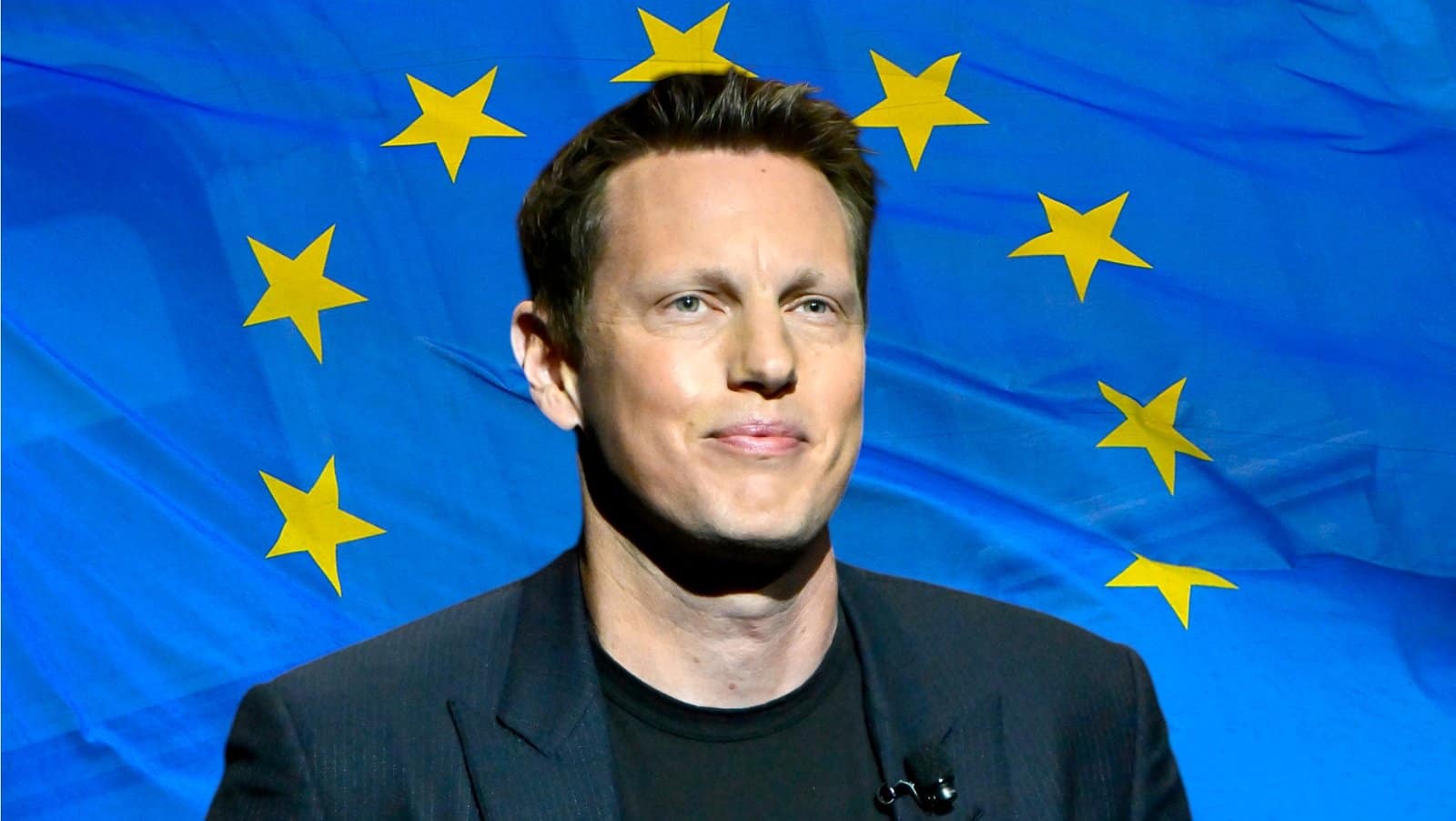
Paramount‘s $111 billion deal to acquire Warner Bros. Discovery (WBD) has taken a major step forward after securing approval from the European Union’s antitrust authority.
The European Commission has greenlit the media mega-merger, in what will be welcome news for David Ellison as he contends with legal challenges in the U.S. and regulatory uncertainty in the UK.
As was previously reported, Paramount has agreed to remedies to receive approval from the European Commission, including exiting its international distribution deal with Universal Pictures.
Watch on Deadline
In the U.S. on Monday, a federal judge granted a temporary restraining order that will pause the Paramount-Warner merger for 14 days. The order was in response to a lawsuit filed by California Attorney General Rob Bonta and 11 other states, claiming that the proposed merger violates antitrust law in three markets, for wide release films, blockbuster films and cable network licensing. The AGs will formally petition the judge in the case to more from the TRO into a preliminary injunction. That would block the merger from closing pending a trial, which would likely spill into next year.
The WGA is also seeking a preliminary injunction to block the deal, filing Wednesday in the same court in the Northern District of California.
A hearing on the injunction is set for August 3. Paramount has a lot riding on the outcome. To sweeten its offer to WBD, it had agreed to pay a so-called “ticking fee” to Warner shareholders of 25 cents a share, or roughly $650 million a quarter, for each day beyond September 30 that the deal has not closed.
The European Commission said it found that at a film production level enough film studios remain as competitors in the European Economic Area, including U.S. majors Disney, Universal and Sony, smaller players Amazon MGM, A24 and Lionsgate, as well as European studios.
However, at film distribution level, the Commission found that as a result of the transaction, “there will be high concentration and increased transparency in the EEA countries where Paramount has a structural partnership with Universal, due to the addition of Warner’s film portfolio. The partnership focuses on the distribution of Paramount’s and Universal’s films to cinema operators through their joint venture, United International Pictures (‘UIP’). The transaction would have meant Warner’s films were also distributed via UIP and, without the commitments, it would have led to worse rental and distribution terms for cinema operators, ultimately disadvantaging consumers.”
The EU requirestermination of Paramount’s stake in UIP in the EEA within 13 months from the closing of the transaction.
It stipulated that, for a period of ten years, Paramount will not, directly or indirectly: enter into any agreement or understanding with Universal to jointly co-distribute films in the EEA; that it will not shift the distribution of Warner’s films from Warner’s existing distributor to the theatrical distributor used by Paramount, where that distributor also distributes Universal’s or Disney’s films in all UIP countries in the EEA (Bulgaria, Croatia, Czechia, Cyprus, Denmark, Estonia, Finland, Greece, Hungary, Iceland, Latvia, Lithuania, Norway, Poland, Portugal, Romania, Slovakia, Slovenia and Sweden); and in the UIP countries in the EEA where Paramount and Universal do not share the same distributor. shift the distribution of Paramount’s films from Paramount’s existing distributor to the theatrical distributor used by Warner, where that distributor also distributes Universal’s or Disney’s films.
The Commission said these commitments “fully address the competition concerns identified by the Commission by ensuring that the films of the merged entity will not be distributed jointly with those of Universal or Disney.”
It noted the decision is conditional upon full compliance with the commitments and an independent trustee under the Commission’s supervision will monitor implementation.
Jill Goldsmith contributed to this report
