
Halftime shows have been a big deal in 2026. Just a few weeks ago, the FIFA World Cup celebrated the midway mark at the final in New Jersey with performances from BTS, Madonna, Justin Bieber, Coldplay and The Muppets’ Electric Mayhem band, which jammed on a cover of the White Stripes’ “Seven Nation Army” with the NY Philharmonic. It was a stellar lineup, but the results were predictably divisive. “I like a lot of them artists,” said former England striker Wayne Rooney, “but I thought it was crap.”
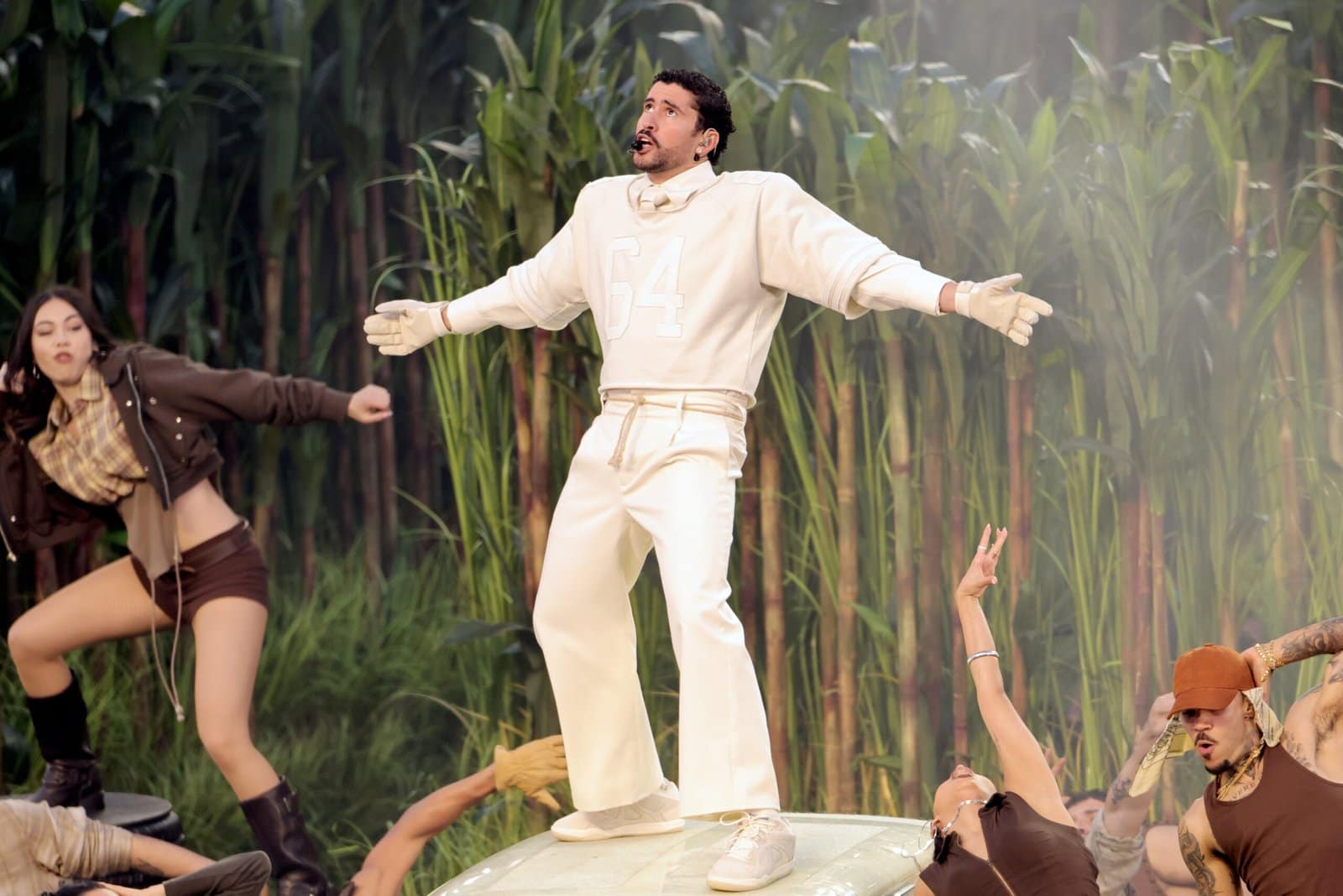
The FIFA event followed less than six months after did the honors for the , mounting a Spanish-language extravaganza featuring guest appearances by Lady Gaga, Cardi B and Ricky Martin, 300 dancing extras and an actual live wedding. The event pulled in 124.9 million viewers, making it the fourth most-watched Super Bowl of all time and earning it nine Emmy nominations in the Variety Program category.
Critics loved the inclusive nature of the show, which ended with Bad Bunny holding up a football emblazoned with the words “Together We Are America.” Again, not everyone was impressed, including the President of the United States, who took to Truth Social to write a withering diatribe: “The Super Bowl Halftime Show is absolutely terrible, one of the worst, EVER! It makes no sense, is an affront to the Greatness of America, and doesn’t represent our standards of Success, Creativity, or Excellence. Nobody understands a word this guy is saying, and the dancing is disgusting, especially for young children that are watching from throughout the U.S.A., and all over the World.”
Watch on Deadline
Today, the Super Bowl is an institution, but the championship only officially got its name in 1967, when the owner of the Kansas City Chiefs used the words to describe the first game to happen after the National Football League’s merger with the American Football League that year. Crowds at the first game, held at the Los Angeles Memorial Colosseum, would surely have be thrilled by the halftime entertainment provided by marching bands from universities of Arizona state and Grambling, Louisiana, playing massive pop hits such as the title song from The Sound of Music and Rossini’s “William Tell Overture”.

Things got a little groovier in the ’70s when Ella Fitzgerald headlined a tribute to Louis Armstrong in 1972, a year after the jazzman’s death. Three years later, more posthumous fun was had to celebrate the life of Duke Ellington, who passed in 1974. A more regular sight, however, was the multi-color, multi-faith outfit Up with People, an apolitical collective of singers that looked and sang exactly like an AI rendition of everything that was awful about America in the 1970s. Not only do Up with People hold the record for number of halftime show appearances (five), the company’s weird cult-like ethos also inspired a 2009 doc titled Smile ’Til It Hurts: The Up With People Story, which reveals some less than wholesome truths behind their squeaky clean facade.
Up With People, despite being the living antithesis of the swinging ’60s, nevertheless gave a halftime tribute to that decade in 1982, two years after a similarly exuberant but musically truly horrendous tribute to the big band era. To be fair, Up with People always knew to put on a show, in the same way that the Moonies knew how to throw a wedding, and their Motown tribute has aged surprisingly well. So has the choreography, in contrast to the following year’s “KaleidoSUPERscope”, a sprawling, North Korea-style cast-of-thousands spectacular that was probably best witnessed from outer space.
If you’re already getting a sense that the Super Bowl wasn’t quite figuring out its audience, it took a staggering amount of time to get where we are now. Star guest at the 1987 final, a salute to Hollywood’s centenary, was 90-year-old George Burns, with 66-year-old spring chicken Mickey Rooney in tow. Chubby Checker was the star guest the next year —fashionable again after having his first chart hit in over 20 years with novelty rap act The Fat Boys — plus Radio City’s Rockettes and 88 grand piano players.
How do you top that? Well for 1989, they came up with a doozy. Presented in 3D, with the world’s first 3D TV commercial (for Diet Coke), the show — called Be Bop Bamboozled, after a song by Gene Vincent— featured an magician-slash-Elvis impersonator named Elvis Presto, who burst out of a Wurlitzer jukebox singing “Blue Suede Shoes”. Surrounded by the Magic Wandas, Presto — actually jobbing singer and backup dancer Alex Cole, a last-minute replacement for an actor who quit to do a Lee jeans commercial — performed an elaborate card trick that is still hard to fathom today, involving the choice of four massive on-pitch playing cards and an applause meter.

With 1991’s choice of New Kids on the Block and the next year’s headliner Gloria Estefan, the Super Bowl seemed to be finally getting the hang of it. But Fox was getting ahead of the game, and, sensing that the halftime shows were getting stale, programmed a live episode of In Living Color against the halftime show that took away 22 million viewers. The NFL were galvanized into action; the next year’s act would change the face of the Super Bowl halftime show forever: Michael Jackson brought in 133.4 million viewers, the first time ratings had actually increased during the halftime show.
Jackson gave a masterclass in how to fill a time-is-tight 15-minute slot, spending the first two minutes onstage without even speaking, striking an aloof military pose in a black suit crisscrossed by what look like gold bullet-belts. Admittedly, the adrenaline rush of “Jam”, “Billie Jean” and “Black and White” in quick succession was quickly undermined by the slush of “We Are the World”, but Jackson had the audience eating out of his hand.
You’d think, then, that lessons would have had been learned — and not the hard way, as the Academy did from the notorious 61st Oscars ceremony, when Rob Lowe danced with an unauthorized Snow White, inviting legal action from Disney. But no; in 1994 came “Rockin’ Country Sunday”, with Clint Black, Tanya Tucker and The Judds, and 1995 gave us “Indiana Jones and the Temple of the Forbidden Eye”, a plug for the recently opened ride at Disneyworld that saw an Indy lookalike searching for the Vince Lombardi Trophy. Inexplicably, Patti Labelle appears, and then, just as oddly, Tony Bennett pops up to sing the 1936 jazz standard “Caravan” right before a hammy bar-fight scene. The shirtless actor who opens the sequence — playing a native who bellows, “Bring to me the trophy!” and instantly seems to question his life choices — is a sight to behold.

In the meantime, the advertising industry had long been ahead of the game. In the early years of the Super Bowl, the best you could hope to see was Chicago Bears linebacker Dick Butkus, who blazed a trail for celebrity endorsement by promoting Prestone antifreeze in 1970. The commercial that changed everything was Ridley Scott’s groundbreaking promo for Apple Macintosh computers — aptly called 1984 — in which a vision of a grim Orwellian dystopia is literally smashed by a rebellious woman with a sledgehammer. A Super Bowl slot at the time went for around $300,000 (over $950,000 in today’s money), a bargain considering that the current going rate in $8-10m, with no guarantees of going viral. Apple hit its 100-day goal of shipping 50,000 units in just 73, at $2,495 a pop, establishing the Super Bowl as the perfect space for “event” marketing.
After the Indiana Jones debacle, the Super Bowl became much more recognizable as the entity we know today. Diana Ross headlined solo the next year, followed by the Blues Brothers in 1997, then another Motown tribute in 1998 that, this time, with artists that were actually on the label — Boyz II Men, Smokey Robinson, The Temptations, and Martha Reeves and the Vandellas — and from here, the slot became more A-list, starting with Phil Collins (2000), Aerosmith (2001), U2 (2002) and, er, Shania Twain (2003).
It all was starting to seem so safe. Who would have thought that Janet Jackson and Justin Timberlake would start the fire? The inciting incident happened at the end of Jackson’s duet with the former NSYNC-er, who tugged at her outfit to reveal the singer’s right breast, her modesty protected by a metal nipple shield. The duo’s protestations that this was “a wardrobe malfunction” weren’t exactly helped by the timing (Timberlake had just sung, “Bet I’ll have you naked by the end of this song”), and the aftershocks of “Nipplegate” still resonate today, with people who don’t have anything better to do.
Normal service was resumed the following year with Paul McCartney (2005), The Rolling Stones (2006), and Prince (2007), who arguably began the drift away from trad white-guy rock, even though the remainders of The Who headlined in 2010. However, the trend towards R&B has done wonders for the Super Bowl, notably when 2022’s show — with Snoop Dogg, Dr, Dre and Mary J. Blige — won its first Primetime Emmy, and again when Kendrick Lamar narrowly beat Michael Jackson’s ratings in 2025.
It’s hard to think of a current Grammy-winning act that hasn’t done their halftime duty — Madonna (2012), Beyoncé (2013), Coldplay (2016), Rhianna (2023), they even let Maroon 5 have a go (2019) — but the one act that continues to slip through the Super Bowl’s fingers: Dolly Parton. “I couldn’t do it because of other things,” she said, “or I just didn’t think I was big enough to do it — to do that big of a production.” Well, Dolly, there’s still time.
