
Did you hear the one about the 34-year-old American woman who directed a starry $40m period studio movie in France and brought it in on time and on budget? No? Funny that. Female filmmakers are feeling particularly invisible at the moment, and no wonder; at this year’s Venice Film Festival, only one film directed outright by a woman — the formidable Danish entry Woman Unknown, by May el-Toukhy, one of the best in the official selection — was deemed acceptable for the 21-film Competition. (And, sorry, no; making Maggie Gyllenhaal head of the jury is not an acceptable salve for this state of affairs.)
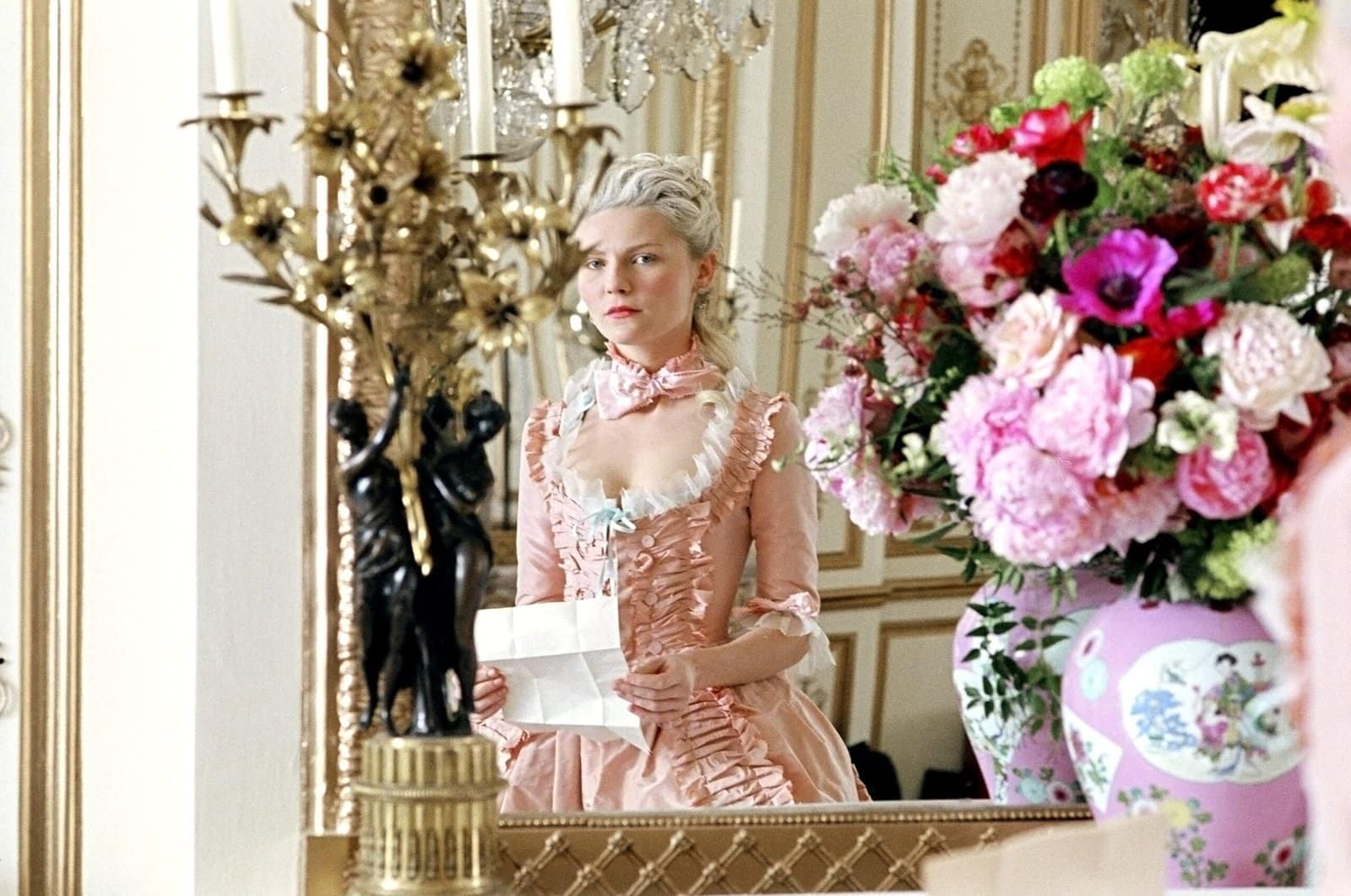
Though Making Marie Antoinette might appear, at first glance, to be a very expensive DVD extra from 20 years ago, when Sofia Coppola’s period extravaganza was first released, this gentle but insightful film by her mother Eleanor percolates with a very modern relevance. Indeed, although she died in 2024, four years after starting it and two years before the finished cut, Eleanor made copious notes on the project, candidly revealing her insecurities about being a woman with a movie camera. Voiced by Diane Lane, the director makes this clear in the film’s opening statement: “I’m basically a shy person and I hate to intrude,” she says. “It’s counter to my personality to shoot a documentary — and yet, over and over again, I do it.”
Clearly, a BTS doc about the ill-fated 18th-century French queen Marie Antoinette, made by her own daughter on location at the storied Chateau of Versailles in Paris, is hardly going to result in anything as substantive as 1991’s Hearts of Darkness: A Filmmaker’s Apocalypse, which catalogued her husband’s trauma on the set of his unravelling 1979 Vietnam War epic Apocalypse Now. But, as a mother, Eleanor is quick to notice the minutiae of what’s happening here, things that are not written so large and yet potentially just as dangerous for a young director making only her third film. “She seems too small and unprepossessing to be the director of a $40m movie,” Eleanor notes.
Watch on Deadline
On any other production, this would basically be EPK material, and one gets the sense that if anyone else were sticking their camera in actors’ faces, they would get very short shrift — and the film’s luminous star Kirsten Dunst almost says as much. But the interesting thing about Making Marie Antoinette is how quickly Eleanor becomes part of the (antique) furniture; it soon transpires that she is quietly capturing everything they will later thank her for: The craft and passion behind the outfits, the set dressing, the spirit of camaraderie and the preposterous but wholly seductive wigs (it is later noted that time spent of hair and makeup is costing the production a whole day of shooting every week).
At nearly 90 minutes, the interest is chiefly for fans of the film, who have grown steadily in number over time, but there are also plenty of nuggets for wannabe filmmakers looking to learn about the harsh realities of mounting a movie so ambitious. But more importantly, there are scenes that show Sofia Coppola being firmly in charge of her vision as she seeks to transpose American teen pop-culture onto “serious” European history, with Dunst being the perfect accomplice as a young woman thrown, blinking, into the limelight — just as she had been in real-life Hollywood, the entertainment world’s Versailles of America.
The film also highlights Sofia Coppola’s very deliberate choices, giving low-key but strong notes to the actors, and confirming her total control over the film’s aesthetic. Her soundtracks have always been fantastic, but Marie Antoinette is arguably the ne plus ultra: As if to reinforce this, her superbly curated deep cuts often play almost unnoticed in the background — on set between shots, the likes of New Order’s “Ceremony”, Aphex Twin’s “Avril 14th”, and anything by Bow Wow Wow prove that her music choices were always part of the grand design.
This film, of course, stops almost exactly a year before Marie Antoinette debuted in Cannes, to a reception still best described as mixed. Sofia Coppola’s vision was way ahead of its time (find a man who would have dared use The Gang of Four’s anti-capitalist anthem “Natural’s Not in It” to open a film about the same subject), although it’s possible that, in her heart of hearts, she knew that maybe the world wasn’t ready for it (“It’s funny,” she says, watching the gaffers at work. “All these guys making the girliest movie ever!”). On top of that, when Eleanor asks her daughter what she’s learned, she replies — in a tone that isn’t jokey – “I’ve learned not to make big movies… [But] I guess I’m glad to say I did this once in my life.”
The most memorable moment in the movie, though, is when Eleanor talks about the paucity of women’s voices in the film industry. When she was Sofia’s age, she recalls, she had three children on the go. “At my age [now],” she wonders (which was then 70), “Shouldn’t I be engaged in my own creative process, not just observing the work of my talented family?” Luckily, she did just that 10 years later, becoming the oldest woman ever to make her feature debut (with 2016’s Paris Can Wait). But this throwaway line hits like a hammer blow in a film that appears to document froth: On the surface, Making Marie Antoinette may look like a well-heeled home movie, but underneath it all there’s a very different story.
Title: Making Marie Antoinette
Festival: Telluride
Director: Eleanor Coppola
World sales: Mubi
Running time: 1 hr 26 mins
