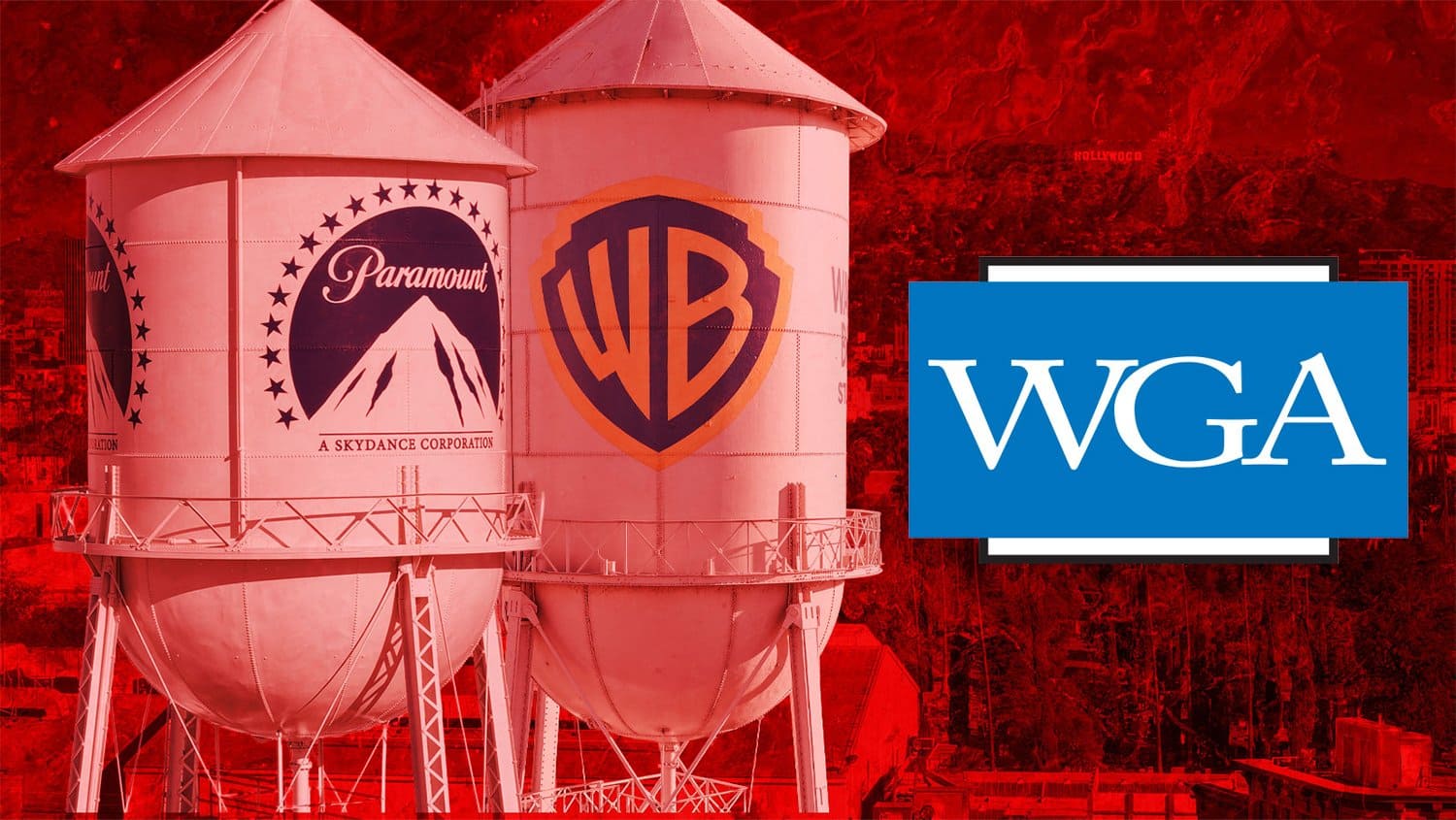
The WGA has confirmed that its own lawsuit over the Paramount–Warner Bros. Discovery merger also has been settled, following the same move by the state attorneys general announced Monday morning by California AG Rob Bonta. In a statement, the guild acknowledged that it could not go it alone.
“We continue to believe the merger will cause damage to writers and the industry at large,” WGA said. “Now that the Attorneys General have settled with Paramount, however, as a nonprofit, the WGA must contend with the reality of forging ahead alone, with no backing from government enforcers, with a complex antitrust lawsuit that would cost millions of dollars to pursue through trial.”
WGA revealed what concessions they got out of Paramount as part of the settlement.
Watch on Deadline
“Consequently, we have also settled our lawsuit with an agreement from Paramount to prohibit writer layoffs at CBS News Broadcast for 5 years, and to pay $17.5 million to our health fund along with our attorneys’ fees in the litigation,” the guild said.
The five-year term matches that of the provisions the AGs got from Paramount.
While begrudgingly settling, the WGA vowed to keep up the fight, focusing on a reinstatement of fin-syn rules for the streaming era.
“As the number of outlets to sell our work to and the corresponding diversity of programming shrinks, we need industry-wide structural separation between streamers and studios in order to promote competition in programming, like the Financial Interest and Syndication Rules once required in broadcast television. We will continue to fight for these goals.”
You can read the full statement below.
During his press conference, Bonta was asked to address the WGA litigation.
“That’s a separate lawsuit with a separate resolution, they sued on their own, of course, adjacent to us,” he said. “We’re grateful that they sued alongside us and stood up for their principles and their convictions, and they had their own pathway to a resolution. But it’s resolved as well.”
Bonta said he believed the WGA settlement, like their own, was reached over the weekend but stressed that “they made their own decisions about their own case, independent.”
“We were never in the same room. They had their own discussions; there was some opportunities for information sharing between the Writers Guild and the states, but they brought their own case,” he said during Monday’s press conference in Los Angeles. “They decided whether or not they wanted to resolve their case and on what terms. And they decided in the end that they would resolve their case.”
While both lawsuits were brought on antitrust grounds, the WGA focused heavily in its own suit about the impact that the merger would have on workers. Just last week, a report commissioned by the Los Angeles County supervisors warned that the proposed Paramount-Warner Bros. merger would erase another 4,500 jobs in the area. That’s after years of production decline that has led to plummeting work opportunities already domestically.
Bonta and the state AGs addressed some of these concerns as well in their own settlement, ensuring a financial penalty if the combined company fails to meet its theatrical release commitments that would largely be split among the major entertainment unions and the California Film and Television Fund.
“This agreement is the opposite of Disney-Fox,” Bonta told reporters, invoking a deal that contributed to a massive wave of consolidation and reduced competition among the major film and TV studios. “The things that we saw in the Disney-Fox merger: a massive decrease in film production, in film output, less films being made. This doesn’t just guard against that and protect against the downside. It locks in a massive upside: 30 films per year for two years, 32 films per year for the next three, with requirements, of course, about what kind of films those are.”
In addition to $30 million fee, the new Paramount-Warner Bros. would be legally required to divest from Miramax if the film production requirements aren’t met.
“This settlement centers workers, thinks about workers [and] their future,” he said, adding later: “I think with this agreement and the commitments of Paramount to have its headquarters here and be here, there is a very bright future for production, job creation, for workers, for the economy here in California, here in LA, and also across the country.”
It’s worth noting that, while Paramount and Warner Bros. did contractually commit to keeping their famed studio lots in Hollywood, there is only a verbal commitment from the companies and from Paramount-Skydance CEO David Ellison for the studio headquarters to remain in the Golden State, too.
Here is WGA’s statement.
We continue to believe the merger will cause damage to writers and the industry at large. Now that the Attorneys General have settled with Paramount, however, as a nonprofit, the WGA must contend with the reality of forging ahead alone, with no backing from government enforcers, with a complex antitrust lawsuit that would cost millions of dollars to pursue through trial.
Consequently, we have also settled our lawsuit with an agreement from Paramount to prohibit writer layoffs at CBS News Broadcast for 5 years, and to pay $17.5 million to our health fund along with our attorneys’ fees in the litigation.
Though we were not successful in blocking the merger, our advocacy brought more attention to the harms that this merger—and others like it—will cause. We will continue to fight the harms of industry consolidation.
“As the number of outlets to sell our work to and the corresponding diversity of programming shrinks, we need industry-wide structural separation between streamers and studios in order to promote competition in programming, like the Financial Interest and Syndication Rules once required in broadcast television. We will continue to fight for these goals.
